Subpar code can easily derail your plans. It will cost you a lot of money, too – poor software quality costs U.S. companies $2.42 trillionevery year.
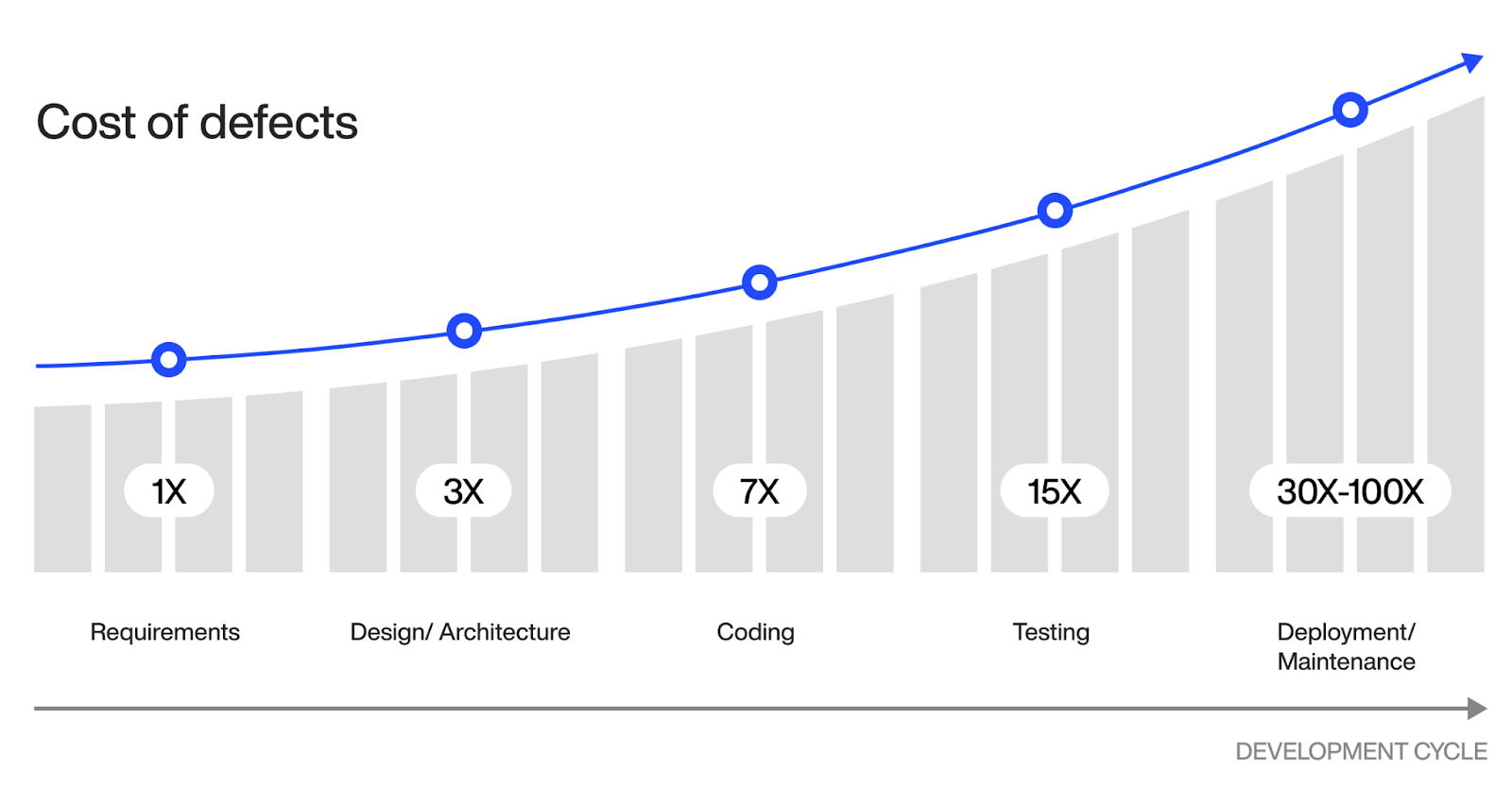
And the longer you wait to fix issues and let them pile up, the more expensive they will be to fix.
Fixing defects and bugs after deployment can be up to 100x more expensive than fixing it at the start of development.
So, you need to have rigorous QA standards in place and communicate them to your outsourced team.
They’ll know what you expect from them and you’ll have a quality product.
And that’s important to a successful partnership.
The problems poor quality control and low quality standards create
Product defects – Subpar code leads to software bugs and defects, which can cause system failures and user dissatisfaction
Higher costs – Fixing bugs post-deployment is time-consuming and low-quality code needs more maintenance, which can significantly drive costs up
Reputational damage – Delivering a flawed, low-quality product can harm your reputation and erode customer trust
How to solve them
Set clear quality standards – Set explicit quality benchmarks for code, testing, and documentation and ensure your outsourcing partner understands and commits to them
Integrate QA from the start – Make sure your outsourcing partner integrates QA from the start of development so they catch bugs early
Regularly review and refactor code – Ensure your outsourced team does regular code reviews and code refactoring to maintain code quality
Major time zone differences
Managing major time zone differences can be a huge challenge when outsourcing software development.
If you’re based in the UK and hire a team from Vietnam, they’ll be 7 hours ahead of you.
You’ll have limited overlapping hours and coordination might be difficult.
And, if you’re not careful about managing these differences, this can lead to slower progress and delayed decision-making.
So, what can you do about this problem?
One solution is choosing a nearshore development partner, i.e. hiring a team from a neighboring country, to completely avoid time zone differences.
But, if you still go with an offshore development partner, you can take steps like rotating meeting times and introducing flexible working hours.
And this will help you manage time zone differences effectively.
The problems major time zone differences create
Limited collaboration – Limited overlapping hours will limit real-time collaboration and immediate problem-solving
Scheduling difficulties – If your work hours don’t overlap, scheduling meetings with your outsourced team becomes difficult
Potential quality issues – Without real-time collaboration, you might not immediately notice problems and errors, which will affect the quality of the output
How to solve them
Nearshore outsourcing – Outsource development to a company in a neighboring country to avoid dealing with time zone differences altogether
Encourage flexible scheduling – Implementing flexible working hours can increase the overlap between your in-house and outsourced teams and improve collaboration
Rotate meeting times – Make sure to rotate meeting times so neither team is unfairly disadvantaged
Ineffective communication
Ineffective communication can derail even the simplest project.
And there’s a bigger risk of that happening when you outsource development.
Language barriers, unclear instructions, and inconsistent updates are all major risk factors you need to deal with from the start.
And the key to that is doubling down on clear and transparent communication. Here’s DECODE’s co-founder and CEO, Marko Strizic, take on this topic:
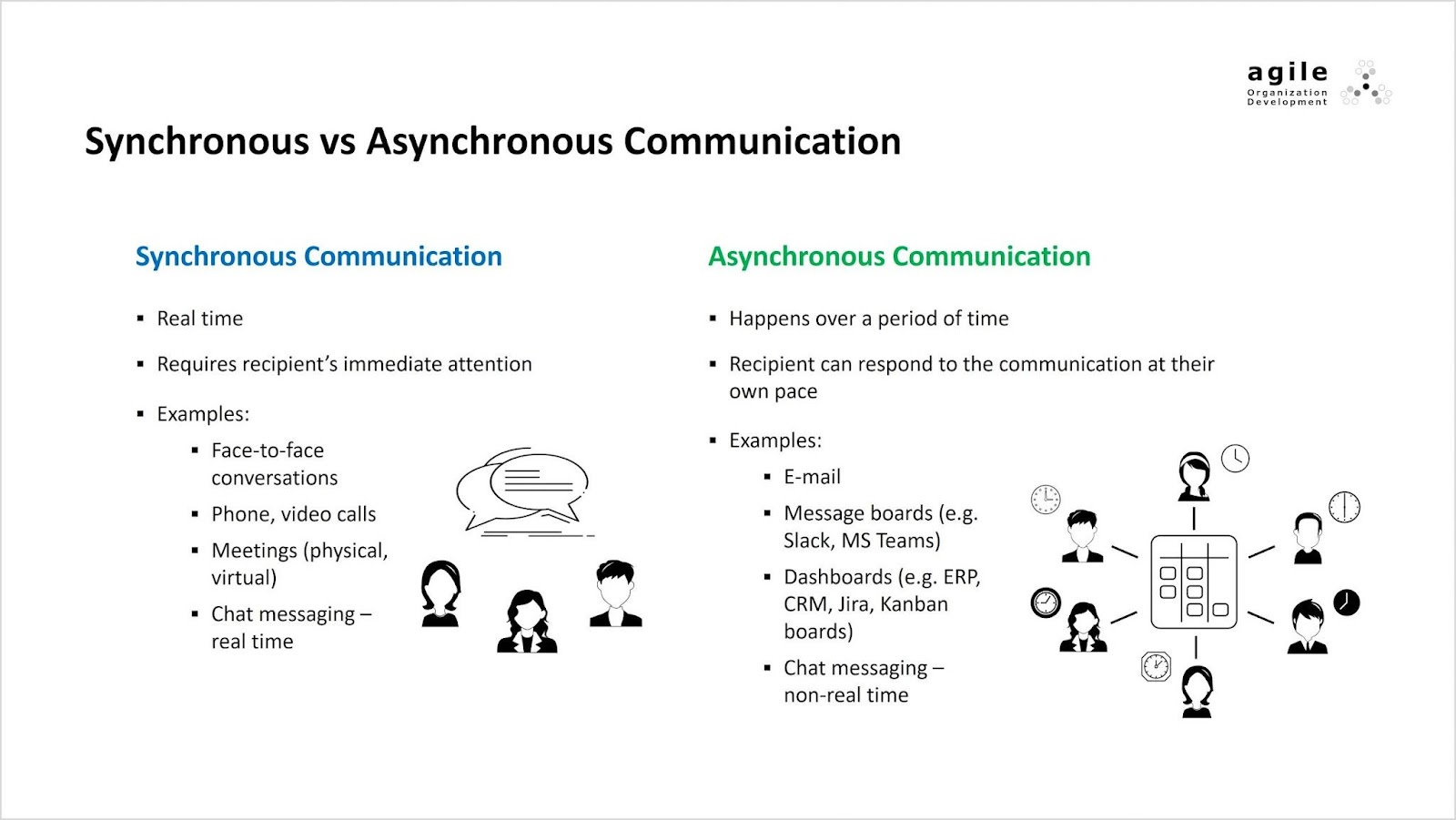
A good way to achieve transparency is using both synchronous and asynchronous communication methods so that your outsourced team is always in the loop.
The most important thing you can do to improve communication with your outsourced team is regularly checking in with them and getting their feedback.
If they have any issues or blockers, they should feel comfortable coming to you to solve those problems.
That’s key for successful communication and collaboration.
The problems ineffective communication creates
Project delays – Poor communication leads to more mistakes that need rework, which causes unnecessary project delays
Low team morale – Persistent communication issues lead to lower team morale and decreased productivity
Increased costs – Delays and rework due to poor communication or unclear requirements significantly increase development costs
How to solve them
Have regular check-ins – Schedule daily or weekly check-ins to make sure everyone gets updated on time and is always on the same page
Encourage feedback – Encourage your outsourced team to give feedback immediately after they run into an issue to prevent unnecessary bottlenecks
Clear communication guidelines – Have clear communication guidelines in place that define how and when you communicate with your outsourced team, and vice-versa
Cultural differences
When you outsource software development, this often means working with people from a significantly different culture.
And this can have a huge impact on your project’s success.
Cultural differences like different communication styles or language barriers can make effective collaboration difficult – especially if they’re not managed correctly.
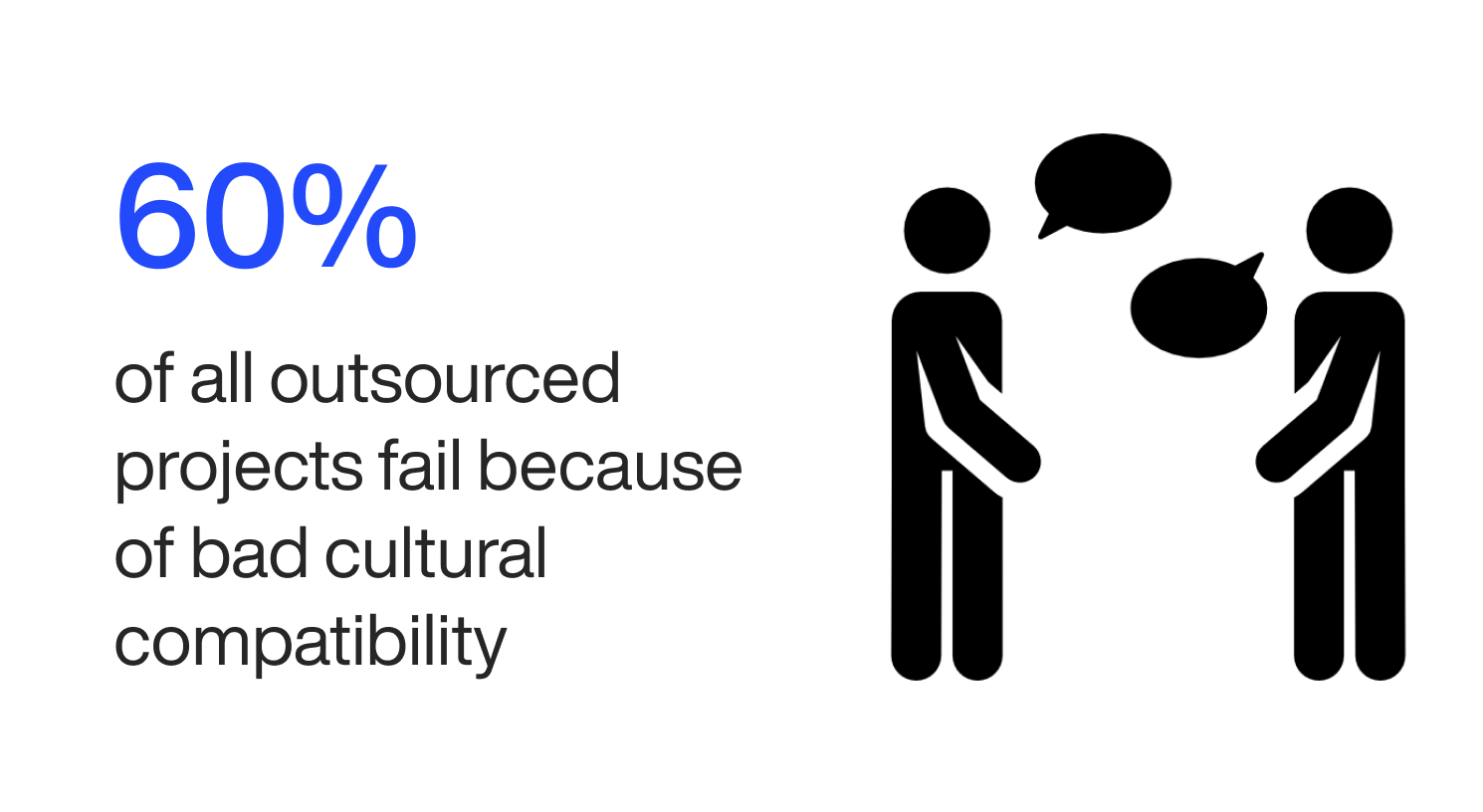
So, it’s no surprise that 60% of all outsourced projects fail because of bad cultural compatibility.
But, there’s a couple of simple things you can do to mitigate this.
The first is standardizing workflows and processes across your in-house and outsourced teams.
This will ensure everyone has the same approach to work and minimize the chance of misunderstandings.
Also, make sure to adapt your communication style to your outsourced team’s preferences and create an inclusive and open work environment.
That’s the best way to manage cultural differences and overcome cultural barriers.
The problems cultural differences create
Misunderstandings and conflicts – Cultural differences, especially around communication, can lead to misunderstandings and conflicts that impact team performance
Low team morale – Unresolved cultural differences can frustrate your outsourced team, leading to lower productivity and quality of work
Poor collaboration – Cultural barriers can make building trust and effective collaborations difficult
How to solve them
Adapt your communication style – When talking to your outsourced team, adjust your communication style to account for cultural differences
Create an inclusive work environment – Building an inclusive work environment where every team member feels valued will minimize the impact of cultural differences
Standardize workflows and processes – Implement universal workflows and processes to make sure everyone has the same approach to work
Loss of control
Outsourcing development to a third party involves giving up some degree of control.
But, being too detached is risky.
Without proper oversight, you could face delays, mistakes, and quality issues – especially if you outsource development to inexperienced developers.
One way you can mitigate this problem is by using project management tools like:
Also, you should choose someone in-house as a project lead to manage the project and set clear expectations from the start.
This way, you’ll have an easier time tracking the outsourced team’s progress and keeping them on track.
And that’s key to successful collaboration.
The problems a loss of control creates
Quality issues – With limited oversight, the quality of the outsourced work might not meet your standards
Project delays – A lack of control can lead to missed deadlines and project delays
Unclear goals and expectations – A loss of control means the outsourced team won’t understand your goals and expectations, which can derail development
How to solve them
Have a project lead – Choose someone in-house to whom your outsourced team will report to and who will lead the project
Set performance goals – Set measurable KPIs to effectively monitor project progress and quality
Hire the right outsourcing company – Choose the right outsourcing partner who has the expertise and experience to successfully deliver complex projects
Data security
Data security is a major concern for any software development project.
But, sharing sensitive data with a third party significantly increases the risk. And the risks are very high already.
But, there’s another aspect you need to consider – potential reputational damage. A full 60% of companies that suffer a data breach end up going out of business.
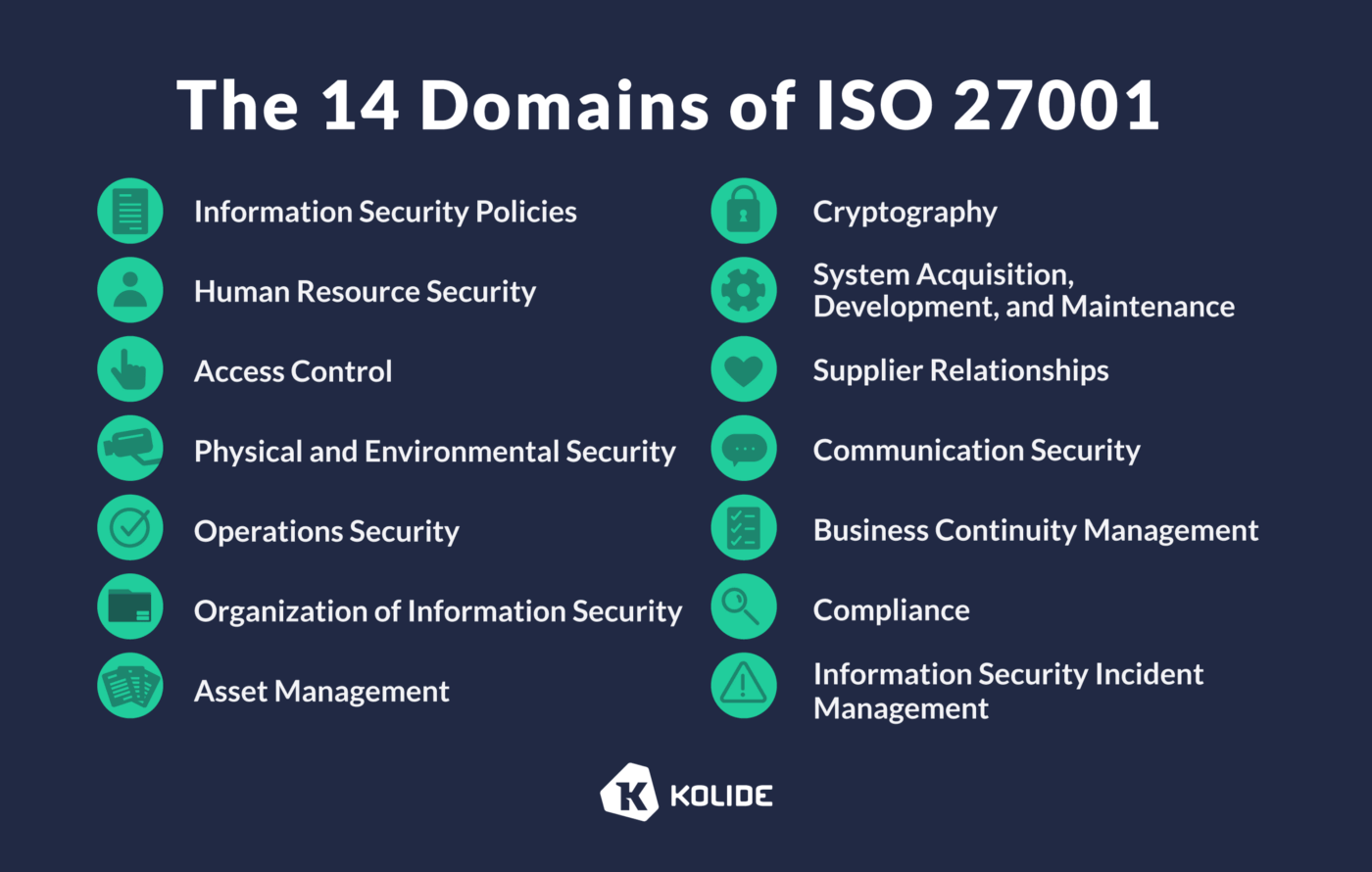
So, you need to thoroughly vet potential outsourcing partners and make sure they follow internationally recognised best practices and standards, like ISO/IEC 27001.
Every reputable software development company will follow these (or similar) standards and have strict security measures in place to prevent data breaches.
So, you just have to do your due diligence before you hire them and you shouldn’t have too many problems.
The problems poor data security creates
Data breaches – Poor data security risks leaving you vulnerable to data breaches, which can cause severe financial and reputational damage
Intellectual property (IP) theft – Proprietary code or designs may be misused or replicated without consent
Regulatory non-compliance – Poor data security can also cause non-compliance with data protection laws, like GDPR and CCPA, which carries large fines
How to solve them
Have clear data handling policies – Define data handling processes and security obligations in your contract with your outsourcing vendor
Implement access controls – Limit data access to authorized personnel only to reduce the risk of internal breaches
Invest in training – Educate your outsourced staff on data security best practices to prevent accidental leaks
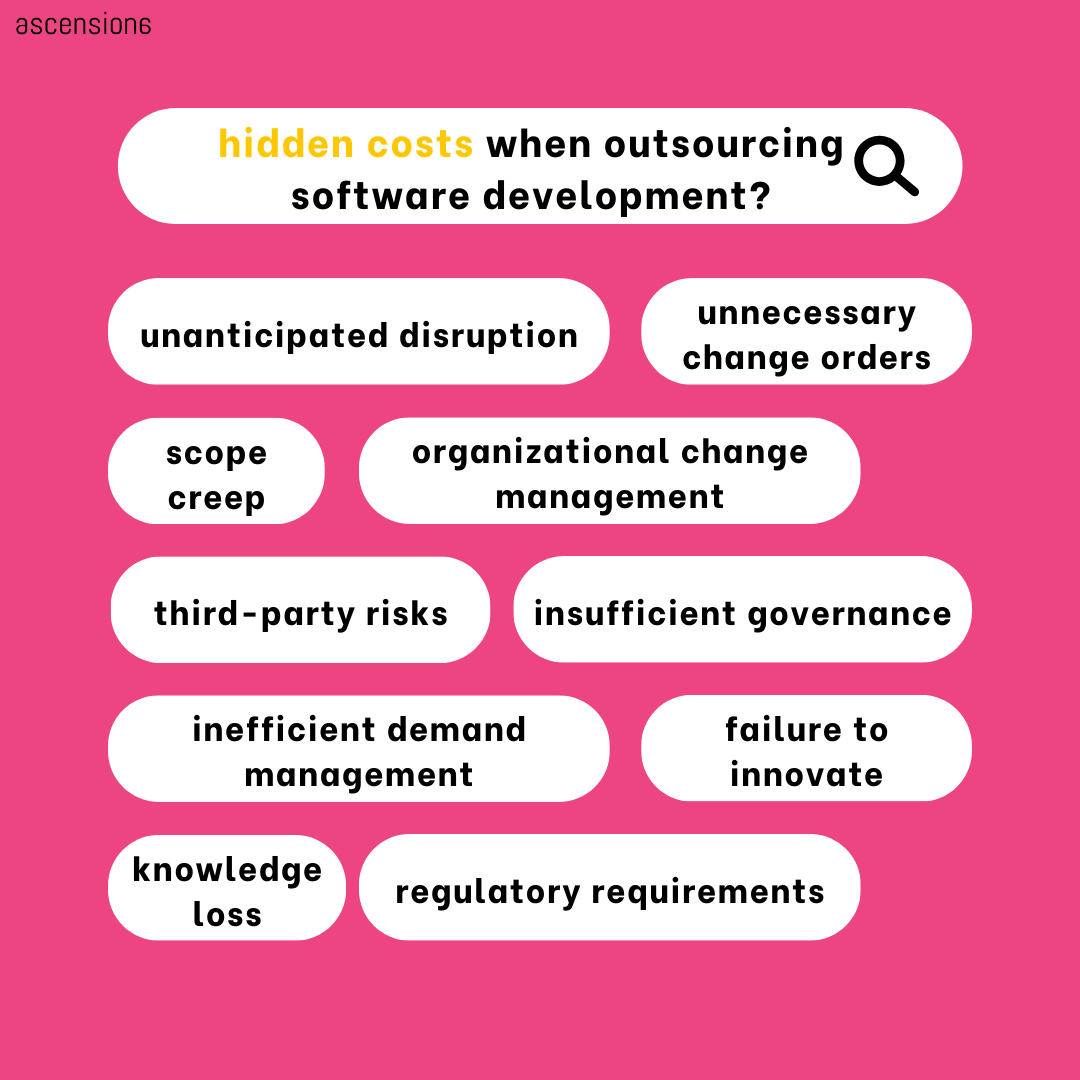
Of course, you likely won’t have to deal with most of these – at least not at the same time.
But, you can still take steps to mitigate them in advance.
One way is ensuring that all costs are detailed upfront and meticulously tracked during development – including costs like cloud hosting fees.
This way, you won’t get surprised by unexpected expenses.
Also, make sure to have some contingency funds kept in reserve.
This will help you cover any sudden expenses without endangering the rest of the project.
The problems hidden outsourcing costs create
Large budget overruns – Hidden expenses can cause you to severely overrun your development budget and compromise your financial plans
Project delays – Having to manage unforeseen expenses can lead to timeline extensions and project delays
Mistrust – These costs can create friction between you and your outsourcing vendor, leading to mistrust which can kill your project
How to solve them
Write a detailed contract – Include all potential costs in your contract to set clear financial expectations from the get-go
Have contingency funds – Hold a part of your budget in reserve to cover unexpected expenses without affecting the main budget
Conduct regular financial reviews – Conduct regular financial audits to identify and mitigate hidden costs before they balloon
Software development outsourcing challenges: FAQs
The key benefits of outsourcing software development are:
Lower development costs
Access to a global talent pool
Faster development and time-to-market
Easy team scalability and flexibility
Access to domain knowledge and expertise
Lets you focus on your core business
To pick the right software development outsourcing company, you need to:
Review their portfolio and expertise
Evaluate their tech stack
Check their reviews
Look into their pricing
Also, you should pay attention to:
Cultural and language compatibility
Their quality and expertise
Security and IP protection
Of course, you can combine in-house and outsourced development, depending on your specific needs.
For example, you can outsource non-core and specialized tasks while your in-house team handles mission-critical parts of the project.
In fact, a hybrid model like that is the best of both worlds – you save money on development without sacrificing quality.
But, you need to make sure the company you choose can work well with your in-house team. Ask them if they have experience collaborating closely with clients’ in-house teams and how they handle working with them.
Yes, you can maintain quality if you outsource development, as long as you choose the right partner and clearly communicate your requirements and expectations to potential partners.
Also, you need to have clear quality standards and communication protocols in place to find the right outsourcing partner.
Looking for a reliable outsourcing partner?
Do you want to cut costs by outsourcing development but are struggling to find a reliable partner?
Luckily, you’re in the right place.
We’re a full-service, high-caliber software development company and we can take care of your project, no matter how complex, from start to finish.
And you won’t have to worry about the challenges we’ve covered, either.
If you want to learn more, feel free to reach out and we’ll set up a meeting to discuss your needs in more detail.
A seasoned software engineering executive, Marin’s role combines his in-depth understanding of software engineering processes (particularly mobile) with product and business strategies. Humbly boasting 20+ years of international experience at the forefront of telecoms, Marin knows how to create and deliver state of the art software products to businesses of all sizes. Plus, his skills as a lifelong basketball player mean he can lead a team to victory.
When he’s not hopping from meeting to meeting, you’ll find Marin listening to indie rock, or scouring the latest IT news.
The IT outsourcing market hits $634B in 2026. Here are 10 trends shaping software outsourcing this year, from agentic AI to outcome-based pricing, with verified data to back it up.