So, you’ve got a great idea but in-house development is too pricey? Or are you on a tight deadline and finding and onboarding new talent would take too long?
But, what are the average offshore software development rates? And where do I find the best engineers? (hint: it’s the only country whose capital starts with “Z”)
We’ve got you covered.
In this article, we’ve compiled hourly rates across 20+ countries, broken down by region and role, so you can compare destinations and make a well-informed decision.
Let’s dive in!
Key takeaways:
Offshore rates vary enormously depending on where you hire. A software engineer in Western Europe bills at $100-160/hr, while the same role in Eastern Europe costs $25-55/hr and in Asia as little as $18-40/hr. Location alone can cut your development budget by 70% or more.
Central Europe offers the best combination of quality and value for European buyers. Countries like Croatia and Poland deliver strong technical talent at $30-65/hr, with high English proficiency and EU legal frameworks.
4 factors shape the rate you’ll actually pay: cost of living, economic stability, talent pool size, and project complexity. Regions with large developer pools have more competitive pricing. But projects requiring specialized expertise in areas like AI will push rates higher regardless where you hire from.
Let’s cover our bases first – what is offshore software development?
Offshore software development is when you outsource development to a company or team in another country – specifically one that’s geographically far away from you.
So, let’s say you’re in the U.S. – outsourcing to Poland or Ukraine counts as offshoring software development.
Offshore outsourcing is a great way to reduce development costs and plug skill gaps in your in-house team.
If you do it right and choose the right partner, you can do that without sacrificing quality.
Factors affecting offshore software development rates
Offshore software development rates vary from region to region and country to country.
Several key factors influence the different rates, like:
Cost of living – Countries with a high cost of living have higher labor costs, which is one of the main drivers behind higher hourly rates.
Economic conditions – Stable economies offer more reliable and predictable pricing and they’re more resistant to external shocks.
Amount of skilled experts – Countries with big talent pools have more competitive rates because there’s a large supply of skilled experts, while countries with smaller talent pools often have higher prices because of a lack of competition.
Project complexity – If you have a complex project, you’ll need to hire experienced engineers who have higher rates while simple projects can be handled by less experienced engineers at lower rates.
Next, we’ll go over the average rates in the top offshore software development destinations on each continent.
Offshore software development rates by country
Now, we’ll give you an overview of the average offshore software development rates by country.
You can pick and choose which countries/regions to compare in our interactive rate explorer or scroll down for an in-depth breakdown of each country’s rates and their pros/cons.
Rate explorer
Compare offshore development rates by country
Pick a role, narrow it down by region and choose a country to compare against.
Average hourly rates by country and role, 2026 (USD)
Country
Region
Software engineer
Solution architect
UX/UI designer
Project manager
Germany
Western Europe
$120-160
$150-200
$90-130
$110-150
France
Western Europe
$100-130
$130-170
$80-110
$100-130
UK
Western Europe
$100-130
$130-170
$80-110
$100-130
Belgium
Western Europe
$140-160
$180-220
$110-140
$130-160
Netherlands
Western Europe
$120-140
$150-180
$100-120
$110-140
Poland
Central Europe
$45-65
$65-90
$35-55
$50-70
Czech Republic
Central Europe
$35-55
$55-75
$30-50
$40-60
Croatia
Central Europe
$30-55
$45-70
$25-40
$35-55
Lithuania
Central Europe
$30-50
$50-70
$25-40
$35-55
Ukraine
Eastern Europe
$30-55
$50-70
$25-40
$35-55
Romania
Eastern Europe
$25-50
$40-65
$20-35
$30-50
Bulgaria
Eastern Europe
$25-45
$40-60
$20-35
$30-50
Serbia
Eastern Europe
$25-45
$40-65
$20-35
$30-50
China
Asia
$50-80
$70-100
$40-70
$50-85
India
Asia
$18-40
$35-60
$18-40
$25-50
Japan
Asia
$70-120
$100-150
$60-90
$80-120
Philippines
Asia
$20-45
$35-60
$18-35
$25-50
Vietnam
Asia
$20-40
$30-50
$18-30
$25-40
United States
North America
$100-150
$130-200
$80-120
$90-140
Canada
North America
$80-130
$100-160
$70-110
$75-120
Mexico
Latin America
$35-60
$50-80
$25-45
$40-65
Brazil
Latin America
$30-55
$45-70
$20-35
$35-55
Chile
Latin America
$30-55
$45-70
$25-40
$35-55
Peru
Latin America
$25-40
$40-60
$20-35
$30-50
Argentina
Latin America
$25-45
$40-65
$20-40
$30-55
South Africa
Africa
$25-45
$40-65
$20-35
$30-55
Morocco
Africa
$20-40
$30-50
$18-35
$25-45
Kenya
Africa
$20-40
$35-55
$18-30
$25-45
Nigeria
Africa
$15-35
$25-45
$15-35
$20-40
Average 2026 hourly ranges for mid-to-senior talent at established agencies, in line with the blended rates many agencies quote. Senior specialists can bill above these ranges. Percentages compare the midpoints of each range. Updated October 2026.
Western Europe has the highest rates in the world. High costs of living, strong labor markets, and deep pools of senior talent all push prices up.
If you’re EU-based, however, and proximity and regulatory fit are real factors, the premium tends to pay for itself.
Germany
With a robust tech industry and a strong emphasis on quality and precision, Germany is a top offshore development destination if you want to build high-quality software.
And as the single biggest ICT market in Europe with over 100,000 companies employing almost 1.2 million people, there’s no shortage of top talent.
But, that talent comes at a cost – Germany has one of the highest average development rates in the world.
Average offshore development rates in Germany
Role
Average hourly rate
Software engineer
$120-160
Solution architect
$150-200
UX/UI designer
$90-130
Project manager
$110-150
Pros and cons of offshore development in Germany
Pros
Skilled workforce
Robust tech ecosystem
Cons
Complex taxation system
High costs
France
France has a fast-growing ICT sector, growing at a compound annual growth rate (CAGR) of 11.77%, with Paris emerging as a major startup hub in Western Europe.
The country produces a large number of engineers each year, particularly through its grandes écoles system.
So, it’s no surprise it’s also a destination for outsourcing development.
But, high labor costs and living standards in France mean that the average hourly rate is high, too.
Average offshore development rates in France
Role
Average hourly rate
Software engineer
$100-130
Solution architect
$130-170
UX/UI designer
$80-110
Project manager
$100-130
Pros and cons of offshore development in France
Pros
Strong creative and technical skills
Large tech hubs
Cons
Potential language barriers
High costs
UK
As a leading tech hub in Europe, the UK has a well-established tech industry and infrastructure with a large pool of skilled engineers.
London is still a major center, but other cities like Manchester and Edinburgh have emerged as major hubs for IT, too.
But, with fierce competition and high costs of living, hiring talent from the UK doesn’t come cheap.
Average offshore development rates in the UK
Role
Average hourly rate
Software engineer
$100-130
Solution architect
$130-170
UX/UI designer
$80-110
Project manager
$100-130
Pros and cons of offshore development in the UK
Pros
Large talent pool
Strong tech infrastructure
Cons
Post-Brexit regulatory divergence from EU law
Very high costs
Belgium
Belgium has a growing tech industry centered around the capital, Brussels.
With multilingual engineers and high-quality development services, it’s a good outsourcing destination if you want to build a top-notch software product.
But, like its neighbors, that high quality comes at a cost and Belgium has one of the highest hourly rates in the world.
Average offshore development rates in Belgium
Role
Average hourly rate
Software engineer
$140-160
Solution architect
$180-220
UX/UI designer
$110-140
Project manager
$130-160
Pros and cons of offshore development in Belgium
Pros
Multilingual
High-quality work
Cons
Smaller talent pool
Very high costs
Netherlands
The Netherlands has a highly educated workforce and one of the best digital infrastructure networks in Europe.
Amsterdam in particular is a major European tech hub, home to a dense cluster of scale-ups and enterprise technology teams.
Dutch software engineers have excellent English skills and with a top-tier education system, their development skills aren’t far behind, either.
But, as one of the most advanced economies and highest standards of living in the EU, development doesn’t come cheap – and that’s reflected in the high hourly rates.
Average offshore development rates in the Netherlands
Role
Average hourly rate
Software engineer
$120-140
Solution architect
$150-180
UX/UI designer
$100-120
Project manager
$110-140
Pros and cons of offshore development in the Netherlands
Pros
Excellent English proficiency
Innovative IT industry
Cons
High costs
Central Europe
Central Europe offers a strong middle ground: highly educated engineers, strong English proficiency, EU membership (in most cases), and rates significantly lower than Western Europe.
It’s a popular nearshore choice for UK and DACH companies.
Poland
Poland is one of Europe’s biggest offshore development centers. The country has a deep talent pool centered around Warsaw, Krakow, and Wroclaw.
Poland’s IT services market is valued at approximately $9.15 billion in 2026 and is projected to reach $13.79 billion by 2032, making it one of the largest in Central Europe.
Rates have risen meaningfully in recent years. Junior developers typically start at $20-27 per hour, while senior engineers can reach $65 or more.
Average offshore development rates in Poland
Role
Average hourly rate
Software engineer
$45-65
Solution architect
$65-90
UX/UI designer
$35-55
Project manager
$50-70
Pros and cons of offshore development in Poland
Pros
Good English proficiency
Large talent pool
Cons
Higher costs compared to Eastern Europe
Czech Republic
The Czech Republic is another significant player in the European offshore development market.
It has a large talent pool, with the capital, Prague, and Brno being major tech hubs.
And its favorable corporate tax policies and competitive rates compared to Western Europe make it easy to see why it’s so popular.
Average offshore development rates in the Czech Republic
Role
Average hourly rate
Software engineer
$35-55
Solution architect
$55-75
UX/UI designer
$30-50
Project manager
$40-60
Pros and cons of offshore development in the Czech Republic
Pros
Favorable tax policies
High-quality work
Cons
Higher rates compared to neighboring countries
Croatia
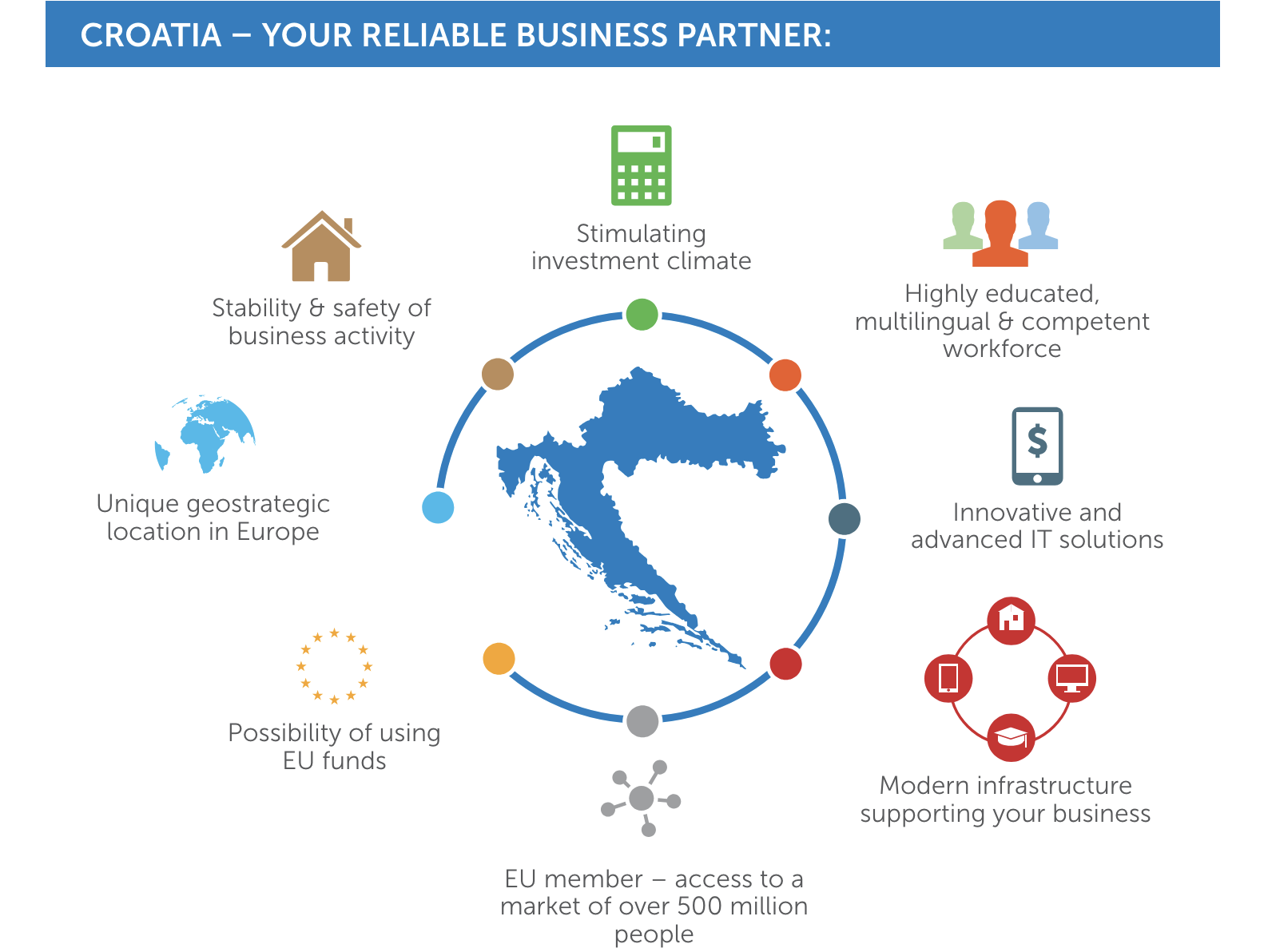
Croatia is one of the best choices if you’re looking to outsource development offshore, especially if you need a full-service development partner.
The country is home to a growing number of international R&D centers and benefits from EU membership and a stable regulatory environment.
Average offshore development rates in Lithuania
Role
Average hourly rate
Software engineer
$30-50
Solution architect
$50-70
UX/UI designer
$25-40
Project manager
$35-55
Pros and cons of offshore development in Lithuania
Pros
Business-friendly environment
Growing tech industry
Cons
Small talent pool
Eastern Europe
Eastern Europe has long been one of the most established offshore development regions in the world.
Rates are competitive, technical education standards are high, and the talent pool is deep, particularly in Ukraine, Romania, and Bulgaria.
Ukraine
Ukraine has one of the largest concentrations of software engineering talent in Europe.
The ongoing war has disrupted some outsourcing operations, and many Ukrainian engineers now work remotely from safer regions within the country or from abroad.
Despite this, Ukraine’s IT sector has shown significant resilience: IT services exports reached $6.66 billion in 2025, representing over 41% of the country’s total service exports.
Average offshore development rates in Ukraine
Role
Average hourly rate
Software engineer
$30-55
Solution architect
$50-70
UX/UI designer
$25-40
Project manager
$35-55
Pros and cons of offshore development in Ukraine
Pros
Large talent pool
Strong technical skills
Cons
Ongoing conflict increases operational risk
Time zone differences with the U.S.
Romania
Romania has a growing offshore development sector, with Bucharest, Cluj-Napoca, and Timisoara serving as its main tech hubs.
It has well-developed infrastructure, with internet speeds twice faster than the global average, and a good education system with strong government support.
And the competitive pricing doesn’t hurt, either.
Average offshore development rates in Romania
Role
Average hourly rate
Software engineer
$25-50
Solution architect
$40-65
UX/UI designer
$20-35
Project manager
$30-50
Pros and cons of offshore development in Romania
Pros
Good quality of work
Competitive rates
Cons
Smaller talent pool
Bulgaria
Centered around the capital, Sofia, Bulgaria has a comparatively small, but strong IT sector with some of the best-performing software engineers in Europe.
Bulgaria offers some of the most competitive rates in Europe.
The country has a strong tradition in mathematics and computer science, and EU membership provides added confidence for EU-based clients.
And that’s why it’s a good choice.
Average offshore development rates in Bulgaria
Role
Average hourly rate
Software engineer
$25-45
Solution architect
$40-60
UX/UI designer
$20-35
Project manager
$30-50
Pros and cons of offshore development in Bulgaria
Pros
Competitive rates
Good educational system
Cons
Smaller IT industry
Serbia
Serbia has a fast-growing IT sector, with Belgrade and Novi Sad as its main tech hubs.
The ICT sector is growing at a 22.8% CAGR, and IT exports reached a record $4.3 billion in 2024.
Add competitive rates and the same time zone as most of Western Europe, and it’s a strong option for European companies.
Average offshore development rates in Serbia
Role
Average hourly rate
Software engineer
$25-45
Solution architect
$40-65
UX/UI designer
$20-35
Project manager
$30-50
Pros and cons of offshore development in Serbia
Pros
High English proficiency
Fast-growing IT sector
Cons
Not an EU member
Smaller talent pool
Asia
Asia is one of the world’s most established offshore development regions, with enormous variance in rates, talent quality, and working culture across countries.
India remains the dominant player by volume, but Vietnam and the Philippines have become increasingly popular alternatives.
China
China has a large and technically capable developer workforce, with Beijing and Shanghai as its primary tech centers.
But rates have risen over the past decade as the domestic tech sector has grown, and language and time zone differences can add friction for US and European clients.
Average offshore development rates in China
Role
Average hourly rate
Software engineer
$50-80
Solution architect
$70-100
UX/UI designer
$40-70
Project manager
$50-85
Pros and cons of offshore development in China
Pros
Strong government support
Huge talent pool
Cons
Language barriers
Cultural differences
Higher costs
India
When you think about offshore software development, India is likely the first country that comes to mind.
The country produces over 1.5 million IT graduates annually and is home to major engineering hubs in Bangalore, Hyderabad, and Pune.
The sheer depth of the talent pool makes it possible to find engineers across virtually every stack and seniority level.
But, that has a downside – quality can vary wildly from company to company, so you should proceed with caution.
Average offshore development rates in India
Role
Average hourly rate
Software engineer
$18-40
Solution architect
$35-60
UX/UI designer
$18-40
Project manager
$25-50
Pros and cons of offshore development in India
Pros
Cost-effective rates
Huge talent pool
Cons
Significant time zone gap (9.5-14.5 hrs from US/Europe)
More back-and-forth on complex briefs
Inconsistent quality
Japan
Japan is an outlier in Asia for rates, closer to Western European levels than to its regional neighbors.
Its tech sector is large and sophisticated, but language and cultural barriers make it a less common offshore choice for Western companies
Average offshore development rates in Japan
Role
Average hourly rate
Software engineer
$70-120
Solution architect
$100-150
UX/UI designer
$60-90
Project manager
$80-120
Pros and cons of offshore development in Japan
Pros
Skilled workforce
High-quality work
Cons
High costs
Language barriers
Philippines
The Philippines has a well-established IT and business process outsourcing (BPO) sector. Manila and Cebu are the main development centers.
English is an official language, so working with them is much easier than with engineers from China or Japan.
And the significantly lower hourly rates don’t hurt, either.
Average offshore development rates in the Philippines
Role
Average hourly rate
Software engineer
$20-45
Solution architect
$35-60
UX/UI designer
$18-35
Project manager
$25-50
Pros and cons of offshore development in the Philippines
Pros
Large pool of English speakers
Cultural compatibility
Cons
Time zone differences
Smaller talent pool than other countries in the region
Vietnam
Vietnam has become one of Asia’s fastest-growing offshore development destinations.
Ho Chi Minh City and Hanoi are its primary tech hubs, and the country benefits from strong government investment in technical education.
Average offshore development rates in Vietnam
Role
Average hourly rate
Software engineer
$20-40
Solution architect
$30-50
UX/UI designer
$18-30
Project manager
$25-40
Pros and cons of offshore development in Vietnam
Pros
Cost-effective rates
Favorable government policies
Growing AI/ML and cloud specialization
Cons
Lower English proficiency
North America
North America carries the highest rates of any region in this article.
Hiring within the US or Canada isn’t typically what most people mean by “offshore development,” but these figures provide useful context if you’re benchmarking the cost difference between onshore and offshore teams.
United States
The U.S., as the home of Big Tech, needs no introduction.
The US has the most mature software development market in the world, with deep pools of senior talent across every major tech stack.
Rates reflect a high cost of living and strong domestic demand for technical talent.
Average offshore development rates in the United States
Role
Average hourly rate
Software engineer
$100-150
Solution architect
$130-200
UX/UI designer
$80-120
Project manager
$90-140
Pros and cons of offshore development in the United States
Pros
Top-tier talent
Advanced tech ecosystem
High-quality work
Cons
High costs
Regional cost variations
Canada
Canada offers slightly lower rates than the US while sharing similar time zones, language, and legal frameworks, which makes it a common nearshore choice for American companies.
Average offshore development rates in Canada
Role
Average hourly rate
Software engineer
$80-130
Solution architect
$100-160
UX/UI designer
$70-110
Project manager
$75-120
Pros and cons of offshore development in Canada
Pros
Competitive rates compared to the U.S.
High-quality work
Cons
Limited talent pool
Higher costs compared to other offshore destinations
Latin America
Latin America has emerged as a strong nearshore option for US-based companies, with overlapping time zones, growing technical talent, and rates well below North American benchmarks.
Quality and infrastructure vary significantly by country.
Mexico
Mexico benefits from geographic proximity to the US and shares a time zone with much of the country, making real-time collaboration straightforward.
Guadalajara and Mexico City are its main tech hubs.
Average offshore development rates in Mexico
Role
Average hourly rate
Software engineer
$35-60
Solution architect
$50-80
UX/UI designer
$25-45
Project manager
$40-65
Pros and cons of offshore development in Mexico
Pros
Close to the U.S.
Cultural compatibility
Cons
Higher costs compared to other Latin American countries
Brazil
Brazil is a huge player in the Latin American offshore development market.
With an IT industry that’s estimated to reach a value of $193.20 billion by 2027, that shouldn’t come as a shock.
But, there’s a catch – Brazil has a notoriously complex tax system, so working with Brazilian companies can be challenging.
Average offshore development rates in Brazil
Role
Average hourly rate
Software engineer
$30-55
Solution architect
$45-70
UX/UI designer
$20-35
Project manager
$35-55
Pros and cons of offshore development in Brazil
Pros
Large talent pool
Competitive rates
Cons
Complex tax system
Moderate English proficiency
Chile
Chile is one of Latin America’s most stable economies and has built a growing tech sector around Santiago.
Its favorable business environment and comparatively strong institutions make it a reliable choice, even if the talent pool is smaller than Brazil or Mexico.
Average offshore development rates in Chile
Role
Average hourly rate
Software engineer
$30-55
Solution architect
$45-70
UX/UI designer
$25-40
Project manager
$35-55
Pros and cons of offshore development in Chile
Pros
Stable economy
High-quality education
Cons
Smaller talent pool
Peru
Peru has a growing developer community centered in Lima.
Rates are among the most competitive in the region, and the country has invested in technical education over the past decade.
Average offshore development rates in Peru
Role
Average hourly rate
Software engineer
$25-40
Solution architect
$40-60
UX/UI designer
$20-35
Project manager
$30-50
Pros and cons of offshore development in Peru
Pros
Competitive rates
Favorable business environment
Cons
Smaller and less mature tech industry
Argentina
Argentina has a well-educated, tech-savvy workforce and an established, mature IT sector, so its position as a major outsourcing hub is no surprise.
It has produced some of the region’s best-known tech companies, though economic instability has impacted valuations and introduced currency risk that clients should factor into vendor selection.
Average offshore development rates in Argentina
Role
Average hourly rate
Software engineer
$25-45
Solution architect
$40-65
UX/UI designer
$20-40
Project manager
$30-55
Pros and cons of offshore development in Argentina
Pros
Strong tech education
Big talent pool
Cons
Economic instability
Africa
Africa is an emerging offshore development region with rapidly growing talent pools, particularly in South Africa, Nigeria, Kenya, and Morocco.
Infrastructure and talent quality vary considerably by country, but the region is attracting increasing interest from European clients looking for competitive rates with manageable time zone overlap.
South Africa
South Africa has the continent’s largest and most mature IT market.
Johannesburg and Cape Town are the main tech centers, and the country’s strong English proficiency and alignment with European business culture make it an accessible choice for UK and EU clients.
Average offshore development rates in South Africa
Role
Average hourly rate
Software engineer
$25-45
Solution architect
$40-65
UX/UI designer
$20-35
Project manager
$30-55
Pros and cons of offshore development in South Africa
Pros
Very high English proficiency
Strong tech skills
Cons
Higher costs compared to the rest of Africa
Smaller talent pool
Morocco
Morocco’s proximity to Europe (overlapping time zones with the UK and Western Europe) and growing technical education sector have made it an increasingly popular nearshore destination for French and Spanish companies in particular.
Average offshore development rates in Morocco
Role
Average hourly rate
Software engineer
$20-40
Solution architect
$30-50
UX/UI designer
$18-35
Project manager
$25-45
Pros and cons of offshore development in Morocco
Pros
Close to Europe
Multilingual
Cons
Small IT industry
Moderate English proficiency
Kenya
Nicknamed the Silicon Savannah, Kenya is the regional IT hub of East Africa.
The country has a young, growing developer community and strong English proficiency.
And with the IT sector accounting for 9.24% of the Kenyan GDP in 2025, it’s becoming a popular offshore software development destination, too.
Average offshore development rates in Kenya
Role
Average hourly rate
Software engineer
$20-40
Solution architect
$35-55
UX/UI designer
$18-30
Project manager
$25-45
Pros and cons of offshore development in Kenya
Pros
Government support
Great English proficiency
Cons
Less experience
Potential infrastructure issues
Nigeria
Nigeria has the largest developer community in Africa and a young, fast-growing technology sector.
Lagos is the primary tech hub.
Rates are among the most competitive in the region, though infrastructure challenges and time zone differences with the US can create challenges.
Average offshore development rates in Nigeria
Role
Average hourly rate
Software engineer
$15-35
Solution architect
$25-45
UX/UI designer
$15-35
Project manager
$20-40
Pros and cons of offshore development in Nigeria
Pros
Large talent pool
Competitive rates
Cons
Infrastructural challenges
Economic instability
Offshore software development rates: comparison by region
Here’s a comparison of the average rates in every region we’ve covered:
Region
Software engineer
Solution Architect
UX/UI designer
Project manager
Western Europe
$100-160
$130-220
$80-140
$100-160
Central Europe
$30-65
$45-90
$25-55
$35-70
Eastern Europe
$25-55
$40-70
$20-40
$30-55
Asia
$18-60
$30-85
$18-55
$25-70
North America
$80-150
$100-200
$70-120
$75-140
Latin America
$25-60
$40-80
$20-45
$30-65
Africa
$15-45
$25-65
$15-35
$20-55
Offshore software development rates: FAQs
If you want to choose the right company for offshore software development, these are the steps you need to take:
Define your goals and requirements first
Review their case studies and portfolio
Read their reviews
Review their development process
Evaluate their tech stack
Look into their pricing
But, to truly choose the right partner, you also need to look for these 3 things in potential partners:
Flexibility and proactivity
Work ethic and cultural compatibility
Transparent and accurate communication
Here’s a few tips to lower the rates of offshore software development:
Choose cost-effective regions (e.g. Eastern Europe or Asia)
Ante is a true expert. Another graduate from the Faculty of Electrical Engineering and Computing, he’s been a DECODEr from the very beginning. Ante is an experienced software engineer with an admirably wide knowledge of tech. But his superpower lies in iOS development, having gained valuable experience on projects in the fintech and telco industries.
Ante is a man of many hobbies, but his top three are fishing, hunting, and again, fishing. He is also the state champ in curling, and represents Croatia on the national team. Impressive, right?
What is offshore software development, how does it work, and how do you choose the right partner? A practical 2026 guide covering costs, models, risks, and top destinations.