Internet of Things (IoT) is one of the most crowded software categories out there, and a genuinely useful, well-designed app is one of the best ways to stand out in it.
If you’ve got a device that’s ready, or close to it, and you need a number to bring to whoever controls the budget, you’ve probably noticed nobody gives you a straight answer.
We’ve had this exact conversation with clients more times than we can count over 14+ years building software, including the IoT companion apps we mention later in this article.
Here’s what drives that cost up or down, and the range you should expect depending on what you’re building.
Key takeaways
IoT app development typically costs between $40,000 and $500,000 or more, depending on complexity, device count, and how much of the platform you build versus buy.
Connectivity choice affects both your build cost and your ongoing bills. Cellular options add a per-device monthly fee that scales with fleet size.
Certification (FCC, CE, and similar) and compliance requirements (HIPAA, MDR, IEC 62443) can add weeks to months to your timeline if you don’t plan for them early.
Security isn’t optional. IoT devices are a growing attack target, and skipping security to save money is one of the most expensive mistakes you can make make.
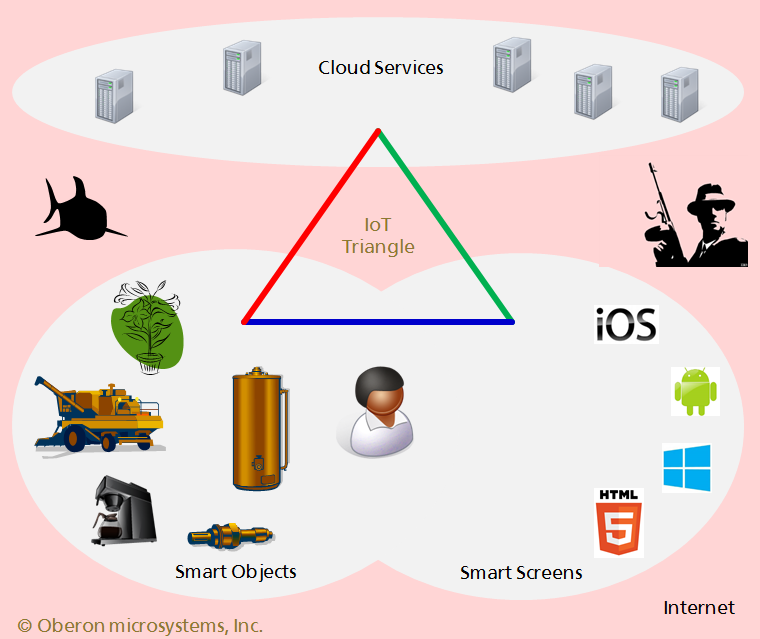
The IoT device has sensors and embedded software that allow it to communicate and share data with other systems.
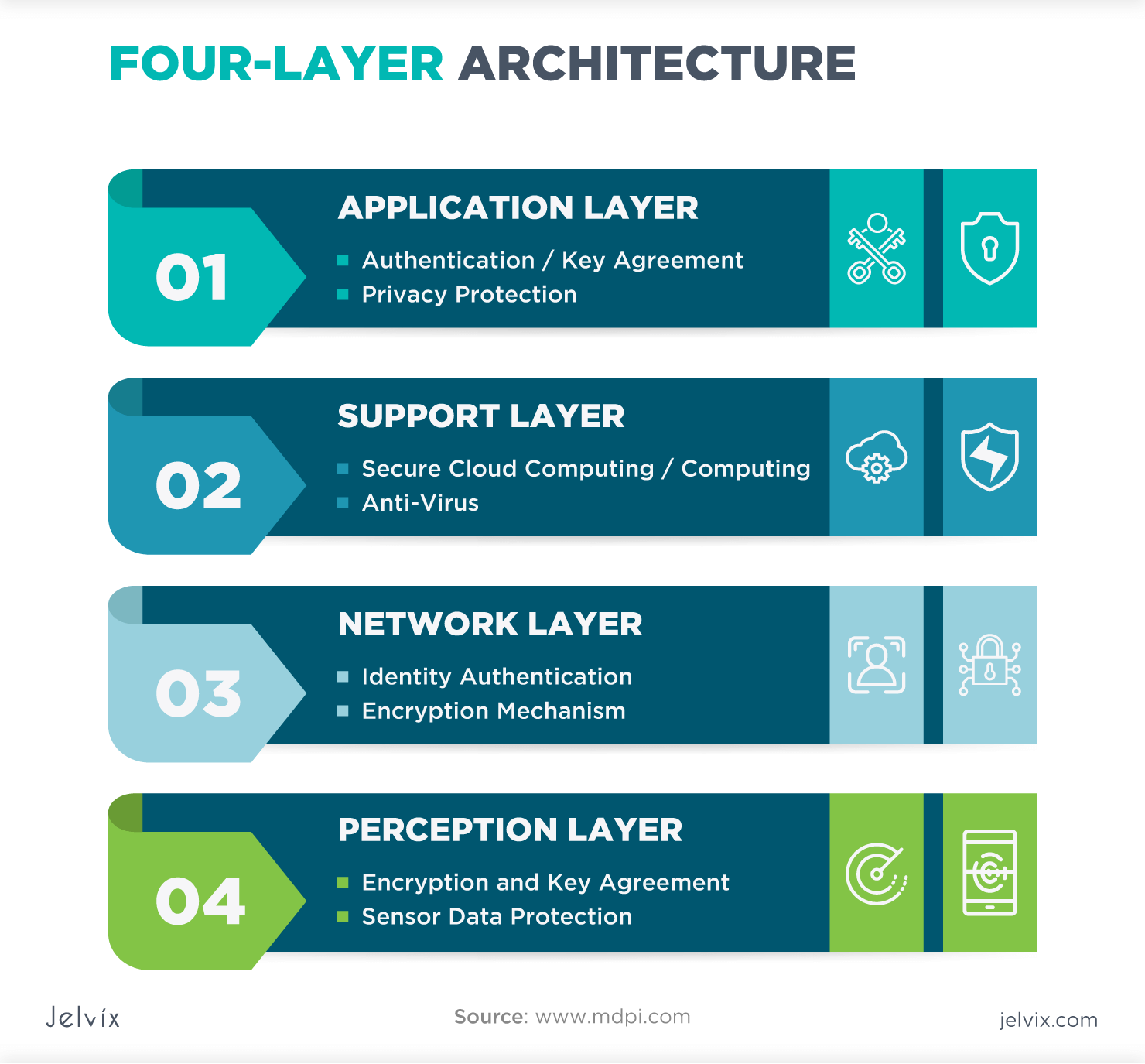
This data is then transmitted through the network and support layers to your IoT app.
And crucially, this works in both directions, as both your app and device can receive and send data to each other.
Other than that, it’s designed and built just like any other app.
How much does IoT app development cost?
Estimating the cost of developing an IoT app can be tricky.
Unfortunately, there’s no one-size-fits-all answer to this question and there are many variables that influence the final cost of development.
The typical cost ranges you can expect based on the complexity of your IoT app are:
Basic IoT apps: $40,000 to $80,000. These are built to manage a single device or a small number of straightforward tasks, like turning on smart lights or adjusting a thermostat.
Advanced IoT apps: $80,000 to $250,000. These connect to multiple devices or need features like real-time data analytics or geolocation, which pushes the cost up significantly.
Complex IoT apps: $250,000+. Enterprise-level solutions, apps that integrate with a wide variety of devices, or that use advanced technologies like AI start here and can run well past $500,000. Large-scale enterprise builds, with custom device fleets and heavy compliance requirements, can climb past $1 million.
Keep in mind that this doesn’t include the cost of developing the IoT device itself, just the app.
Other recurring costs, like cloud hosting, data storage, and connectivity plans, will add ongoing expenses on top of the initial build.
Next, we’ll break down the nine factors that most influence the cost of IoT app development.
9 key IoT app development cost factors
Here, we’ll look at the key IoT app development cost factors in more detail.
IoT device type
Not all IoT devices are created equal.
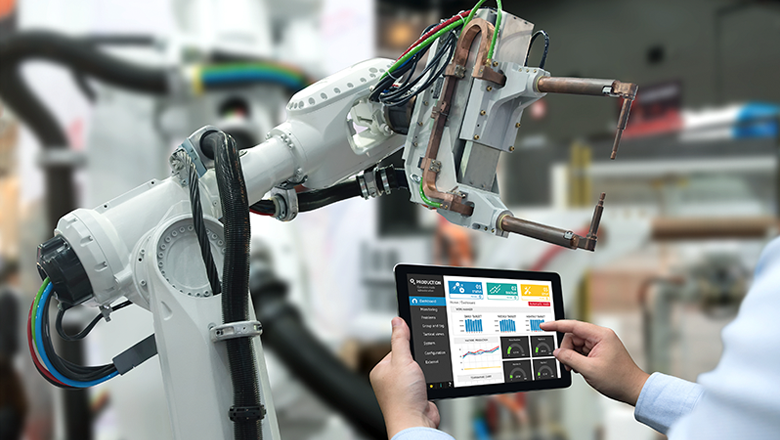
Some are relatively simple, like smart light bulbs or temperature sensors, while others are far more complex, especially industrial IoT solutions.
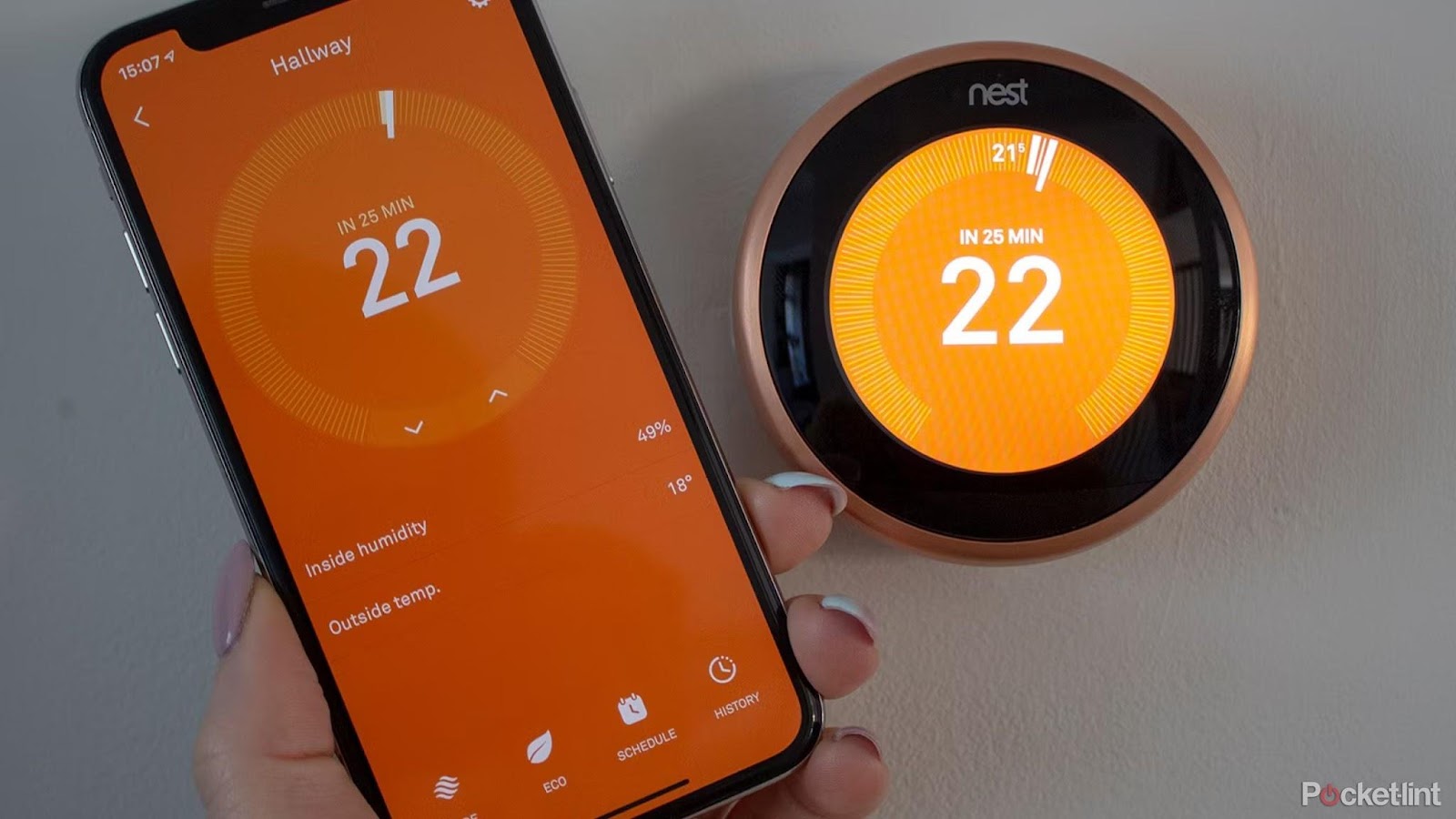
For example, developing an app to control a smart thermostat like Nest is relatively straightforward.
These apps often need to have advanced functionalities like:
Advanced monitoring systems
Predictive maintenance
Secure communication protocols
Devices that use common protocols like Wi-Fi or Bluetooth are generally cheaper to integrate. Devices that rely on more specialized protocols, like Zigbee or LoRaWAN, take longer to build and cost more to integrate.
One thing that’s changed since we last looked at this: Matter, the unified smart home standard backed by Apple, Google, Amazon, and Samsung, has cleaned up a lot of the fragmentation that used to make consumer IoT integration (like a Nest-style thermostat) more expensive.
If your device supports Matter, you generally spend less time on interoperability testing than you would have a few years ago.
Connectivity and data plan costs
How your device connects to the internet shapes both your build cost and your ongoing bills, and it’s easy to underestimate.
Wi-Fi and Bluetooth Low Energy (BLE): cheapest to integrate, with no recurring carrier fees. They only work at short range and typically need the device to be near a hub or phone.
Zigbee, Z-Wave, and Thread: the mesh protocols behind most smart home ecosystems, and increasingly unified under Matter. They cost more to integrate than Wi-Fi or BLE, but still don’t require a data plan.
LoRaWAN: built for long range and low power, which makes it a strong fit for agricultural or industrial sensors spread across a large site. You’ll need either your own gateway infrastructure or a subscription to a network provider.
Cellular (NB-IoT, LTE-M, or full 5G): connectivity anywhere, with no local infrastructure. You pay for it with a monthly SIM or data fee per device. At a few thousand connected units, that can end up costing more over three years than the app did to build.
We always push clients to model connectivity costs at their target device volume, not their pilot volume. A $2-a-month data plan looks trivial for 50 test units and turns into a real budget drain at 20,000 units in the field.
Hardware and prototyping costs
The cost ranges in this article cover the app itself, not the physical device, but most people asking “how much does IoT cost” are really asking about the whole system.
If you don’t already have working hardware, budget for it separately and expect it to move the timeline.
A basic prototype, sensors, a microcontroller board, and a simple enclosure, can run from a few hundred to a few thousand dollars per unit at low volume.
Costs drop sharply at mass-production volumes, but only after you’ve paid for tooling. Injection-molding tooling alone can run into the tens of thousands of dollars before you produce a single unit at scale.
Hardware also has its own development cycle: printed circuit board (PCB) design, industrial design, and multiple rounds of prototyping, all of which typically need to happen before app integration and testing work can really start.
This is one of the most common sources of scope creep we seein IoT projects.
You budget carefully for the app, then discovers mid-project that the hardware needs another revision, which pushes out the app’s own testing schedule along with it.
Before we scope any IoT project, we ask exactly where the hardware stands: already shipping, in prototype, or still a concept.
Development team size and location
The size and location of your development team will seriously affect your development budget.
A skilled, well-balanced development team is essential for building a good IoT app. A larger team can work faster but increases your overall costs, while a smaller team is cheaper but takes longer.
An experienced team with specialized skills works faster and makes fewer costly mistakes, but that level of expertise doesn’t come cheap.
According to Glassdoor, senior software engineers earn around $210,000 a year on average in the US, while software engineers earlier in their career average around $151,000.
These figures shift over time, so treat them as a rough benchmark rather than a fixed number. Add benefits and overhead, and an in-house team gets expensive quicky, regardless of seniority.
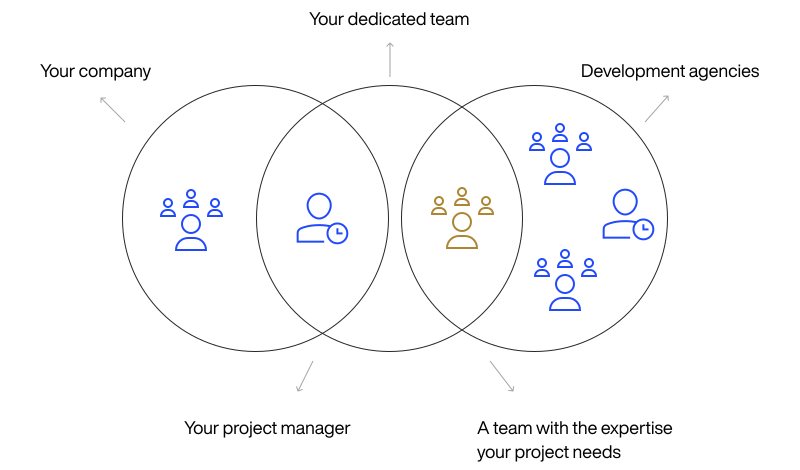
So what other options do you have if you’re on a tight budget?
The cheapest option is hiring a group of freelancers, but it’s also the riskiest.
The more cost-effective option, for most teams, is outsourcing development to a dedicated team. You get senior expertise without carrying the full cost of in-house hiring.
It’s the best of both worlds, since you’ll cut development costs without sacrificing quality.
Average hourly development rates by role and region
Region
Software engineer
Solution Architect
UX/UI designer
Project manager
Western Europe
$100-160
$130-220
$80-140
$100-160
Central Europe
$30-65
$45-90
$25-55
$35-70
Eastern Europe
$25-55
$40-70
$20-40
$30-55
Asia
$18-60
$30-85
$18-55
$25-70
North America
$80-150
$100-200
$70-120
$75-140
Latin America
$25-60
$40-80
$20-45
$30-65
Africa
$15-45
$25-65
$15-35
$20-55
Let’s say you’re a U.S.-based company and you outsource your IoT app’s development to Eastern Europe.
Your labor costs will be 2-3x lower and you’ll minimize (or completely eliminate) other costs like:
Recruitment costs
Onboarding costs
Employee benefits
Administrative costs
If you hire a company with the right expertise, you’ll also get a long-term development partner who won’t just build your app – they’ll help you grow it, too.
And you just can’t beat that.
IoT app type and features
The type of IoT app you’re building and its features will heavily influence the overall development cost.
The first factor is your app’s platform, like:
Android
iOS
Web
Cross-platform mobile
Desktop
Targeting more than one platform costs more. Even then, you can still cut costs. Building a cross-platform mobile app, for example, is much cheaper than building two separate native apps.
But, the features you want your app to have are even more important than the platform(s) you’re targeting.
The features you want are even more important than the platform you’re targeting. Your app’s complexity determines the level of effort required for development, which directly drives cost.
Basic functionality is often enough for simple consumer IoT apps. More sophisticated apps need advanced features that add both complexity and cost, such as:
Real-time data processing
Data analytics
Automation and AI
User authentication and security
Third-party integrations
You also have a choice between a fully custom IoT app or a pre-built platform. A custom app gives you full control over features and functionality, but it’s more expensive.
Pre-built platforms, like AWS IoT Core or Microsoft Azure IoT Hub, offer scalability and essential features out of the box, which is a solid way to cut both development time and cost.
We’d lean toward a pre-built platform for most first products. Building your own device-management layer from scratch is rarely worth it unless your scale or your requirements are genuinely unusual.
Third-party integrations
Third-party integrations are essential to many IoT apps.
They improve functionality by connecting the app with external services, platforms, or devices, letting your app communicate with other systems, use external data, or add features without building them from scratch.
Your team will need to build or integrate APIs to connect these services with your app, and that adds development complexity and cost.
The more integrations you need, the more time and resources your team needs to make sure everything works smoothly.
Some of the most common integrations for IoT apps include:
Cloud platforms: Most IoT apps need a cloud platform to store and process data. Popular options include AWS, Microsoft Azure, and Google Cloud. Cloud services often come with ongoing costs for data storage, bandwidth, and processing.
Voice assistants: Integration with Amazon Alexa, Google Assistant, or Siri is popular for consumer IoT devices. It can improve your app’s user experience, but it requires additional coding, API management, and rigorous testing to ensure compatibility.
Payment gateways: If your IoT app includes e-commerce features or subscription models, integrating a payment gateway like Stripe, PayPal, or Square is essential. Integration takes real development effort, and these services come with their own fees.
Data analytics and AI platforms: IoT apps often need to process large amounts of data in real time. Third-party analytics platforms, like Google Analytics or Posthog, give you strong data analysis and AI-driven insights, and can help you build features like predictive maintenance or personalized user experiences.
Each integration comes with a price tag.
They increase both upfront development costs and ongoing expenses through platform fees, API usage costs, and maintenance, so choose them carefully rather than integrating everything that seems useful on paper.
Regulatory and certification costs
Any device that transmits a radio signal has to be certified for every market it ships into, and that cost is easy to miss when you’re scoping an app-only budget.
Radio certification, per market: in the US that means FCC certification, and in the EU it’s CE marking. Other markets have their own equivalents, like ISED in Canada or Japan’s Association of Radio Industries and Businesses (ARIB).
Testing costs and timelines: certification for a small consumer device can run from a few thousand to tens of thousands of dollars per market, and it can add weeks or months to your launch.
Industrial and healthcare compliance: health data usually has to meet HIPAA requirements in the US, medical devices in the EU fall under the Medical Device Regulation (MDR), and industrial control systems often need to meet IECstandards like IEC 62443.
These requirements don’t just affect the hardware, either. They shape the app too.
Encryption standards, audit logging, and data residency rules often trace directly back to a specific regulation your device has to meet.
Our take: budget compliance and certification into the plan from day one, not as a final step before launch.
Failing certification late sends you back into redesign, and redesign after you thought you were done is the most expensive kind of rework there is.
Security standards
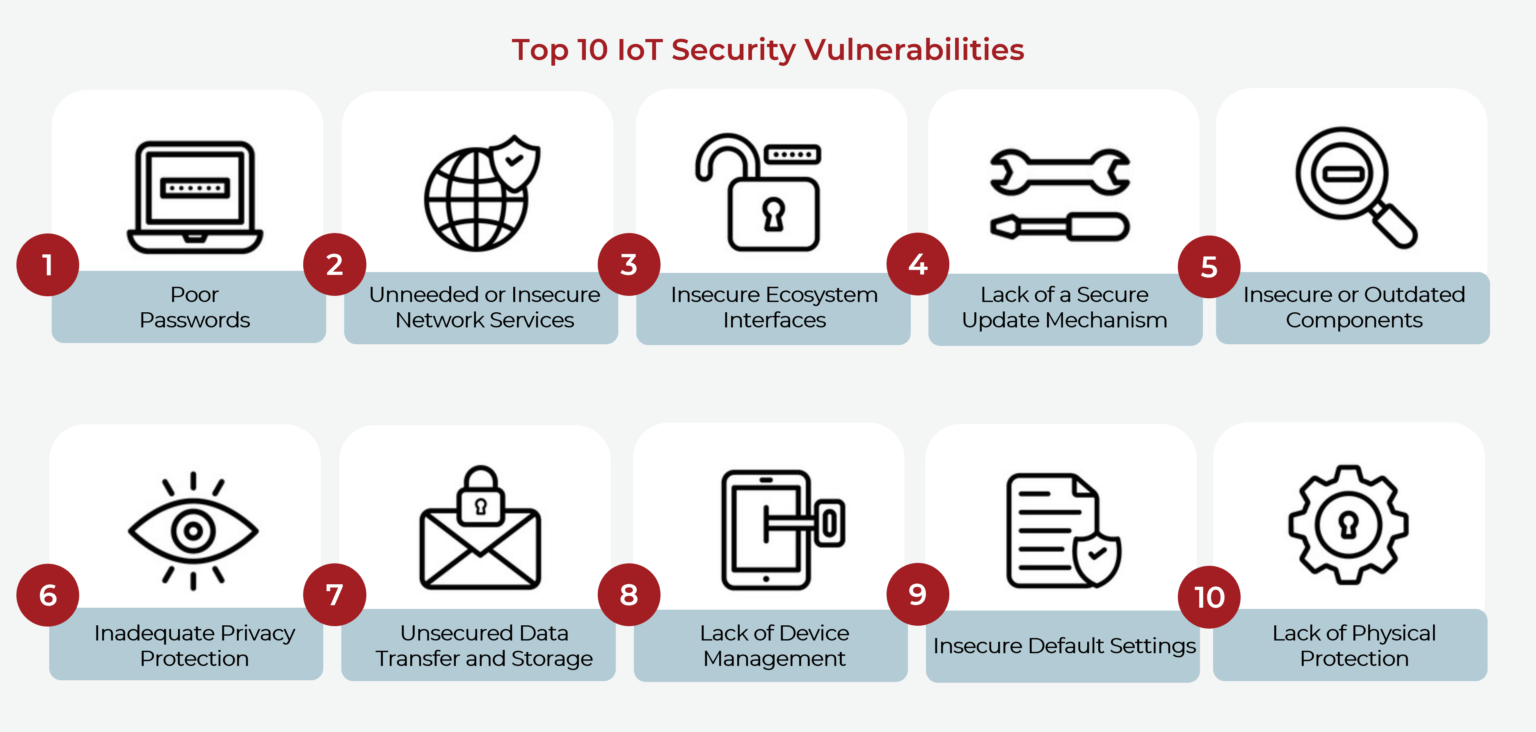
Security is non-negotiable when it comes to IoT app development.
IoT devices and apps collect and transmit sensitive data, which makes them an attractive target.
Routers alone make up over 75% of observed IoT attack incidents, and three malware families, Mirai, Mozi, and Gafgyt, are behind 75% of malicious IoT payloads, according to Zscaler’s 2025 ThreatLabz report.
Some sectors are seeing sharp spikes: attacks on the energy sector alone were up 387% year over year.
They’re also uniquely vulnerable compared to standard apps.
To build a truly secure app, you’ll need to add features like:
End-to-end encryption: All data is encrypted as it travels between devices, cloud platforms, and the app, which prevents unauthorized access.
Authentication and authorization: Secure mechanisms like multi-factor authentication (MFA) and biometrics prevent unauthorized access to devices, so only the right users can control specific devices or access sensitive data.
Secure communication protocols: IoT devices often communicate over networks that aren’t fully secure, like Wi-Fi or Bluetooth. Protocols like Transport Layer Security (TLS) or Datagram Transport Layer Security (DTLS) keep data encrypted during transmission.
Firmware updates and patches: Regularly updating your device and app addresses new vulnerabilities. An automatic update system, or over-the-air (OTA) firmware updates, adds cost but keeps your app secure over time.
And while securing an IoT app isn’t cheap, the cost of neglecting security is far, far higher.
The average cost of a data breach reached $4.99 million in 2026 – and that’s just the financial cost.
Beyond the direct financial hit, there’s another cost: the time your team spends on incident response instead of building, and the trust you lose with users who gave you access to their homes, their equipment, or their health data.
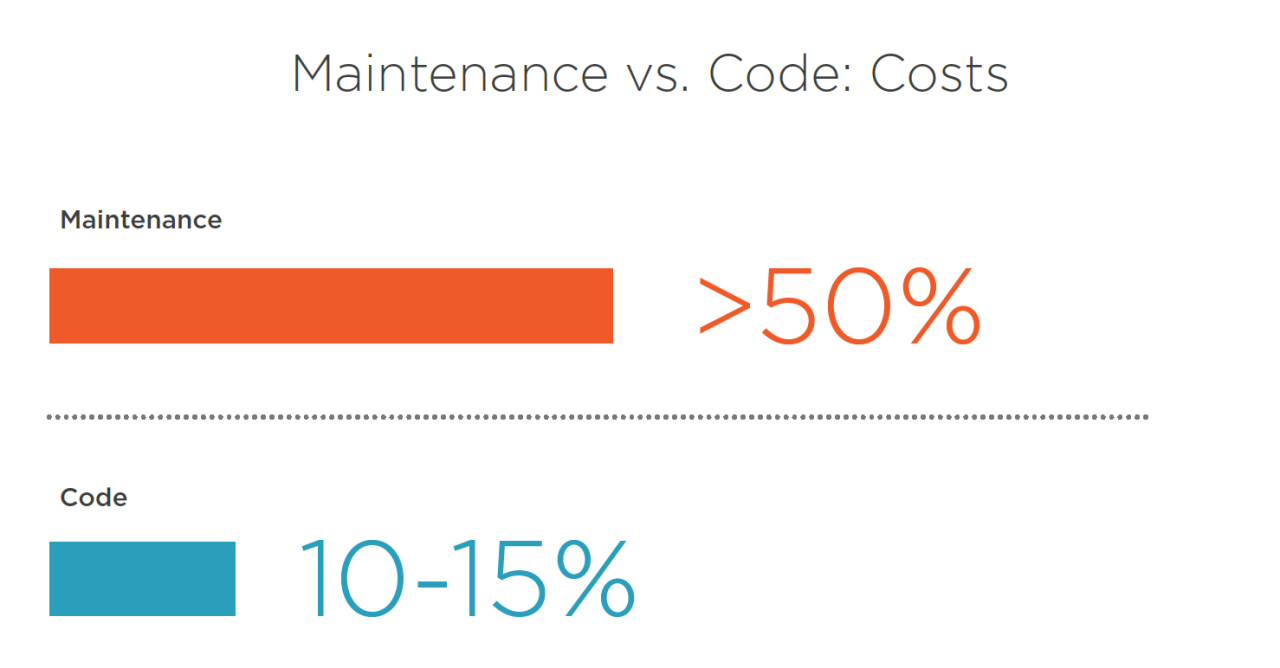
Long-term maintenance and updates
Building an IoT app is not a one-time investment.
IoT apps are part of a dynamic ecosystem and devices, networks, and software constantly evolve.
So, you need to regularly update and maintain your app if you want to keep pace with the competition.
That’s because maintenance and updates includes things like:
Bug fixes and performance improvements – Like any app, IoT apps get bugs or performance issues after launch. You’ll need regular monitoring and updates to fix issues, optimize data processing, and ensure your app works smoothly.
Device compatibility and firmware updates – Firmware updates for connected devices ensure seamless communication with your app. This is especially important for consumer IoT products like wearables or smart home systems, where compatibility with the latest devices is key for user retention.
Scalability and infrastructure updates – As your IoT system grows, your infrastructure needs to scale accordingly. This includes upgrading cloud storage, optimizing server performance, and improving data processing algorithms to handle increased loads.
Feature improvements – User expectations constantly evolve, so to stay competitive you need to regularly add new features or improve existing ones.
That’s a lot of work and the costs quickly add up.
Still, your maintenance costs will primarily depend on your app’s complexity.
But, a good rule of thumb is budgeting 15-25% of your initial development budget for annual maintenance.
Your IoT app development timeline depends on the complexity of the app, the number of features, and the types of devices involved.
On average, developing a basic IoT app takes around 3 to 6 months.
For more complex apps, especially those involving multiple devices, advanced analytics, or enterprise-grade security, development can stretch to 9-12 months or more.
Partly.
Requirements, user flows, screens, and cloud setup can all progress while the device is still in the prototyping stages. What has to wait is device integration, because every firmware or protocol change means redoing it.
It depends on how the first one was built.
If the app was written against a single hardcoded device, expect significant rework. If it was built with an abstraction layer for device communication, adding a model is closer to incremental work.
Need an IoT app development partner?
Do you have an IoT device but don’t have the in-house resources to build an app? Or do you want to lower development costs without sacrificing quality?
When something unusual happens, Vlado is the man with an explanation. An experienced iOS Team Lead with a PhD in Astrophysics, he has a staggering knowledge of IT. Vlado has a lot of responsibilities, but still has time to help everybody on the team, no matter how big or small the need.
His passions include coffee brewing, lengthy sci-fi novels and all things Apple. On nice days, you might find Vlado on a trail run. On rainier days, you’ll probably find him making unique furniture in the garage.
A seasoned software engineering executive, Marin’s role combines his in-depth understanding of software engineering processes (particularly mobile) with product and business strategies. Humbly boasting 20+ years of international experience at the forefront of telecoms, Marin knows how to create and deliver state of the art software products to businesses of all sizes. Plus, his skills as a lifelong basketball player mean he can lead a team to victory.
When he’s not hopping from meeting to meeting, you’ll find Marin listening to indie rock, or scouring the latest IT news.