How we integrated AI into our sales operations

The hype around AI and its potential to transform organizations is huge. But is any of it real? We built a set of AI systems and workflows to find out, starting with our own sales department. Here’s what we built and what changed.

Slack hero

Short summary

Department

Revenue

AI solutions

Lead prioritization

CRM hygiene system

Company classification

MCP infrastructure

Rag knowledge base

Timeline

5 months

We’re a software development company, working with international clients. Finding and qualifying those clients falls on our sales team. But very often, they had to rely on gut feel to rank prospects, use data that was often wrong or conflicting, and work with a CRM (Customer Relationship Management tool) full of duplicates and bad inputs.

So we built five solutions to fix it.

The challenge

In B2B sales, the two questions you’re always trying to answer are: is this a company we’d want to work with, and are they likely to need us right now. Answering those well takes good data: what industry a company is in, how big they are, what they build, and whether there are signals they’re looking for a development partner. Our data didn’t answer those questions well.

Three things were broken:

The industry data was wrong. We used tools like LinkedIn and Apollo to categorize companies by industry. The two platforms often disagreed on the same company. A software company serving logistics clients might be labeled “Logistics” in one and “Computer Software” in the other. Our whole scoring system was built on top of those tags, so wrong tags meant wrong scores.

Lead prioritization was manual. Our reps did rank prospects, but it was based on experience and intuition. There was no scoring, no external signals, nothing that could be checked or improved over time.

CRM hygiene had slipped for years. Fields went unfilled, contracts had no link back to the deal, profiles were incomplete, and duplicate companies piled up in Pipedrive. Cleaning it all up manually would have taken weeks, so it never happened.


The solution

We built five things, each aimed at one part of the problem:

AI that took over CRM hygiene, doing the ongoing cleanup work no one had time for by hand. It runs continuously, instead of waiting for someone to notice the mess.

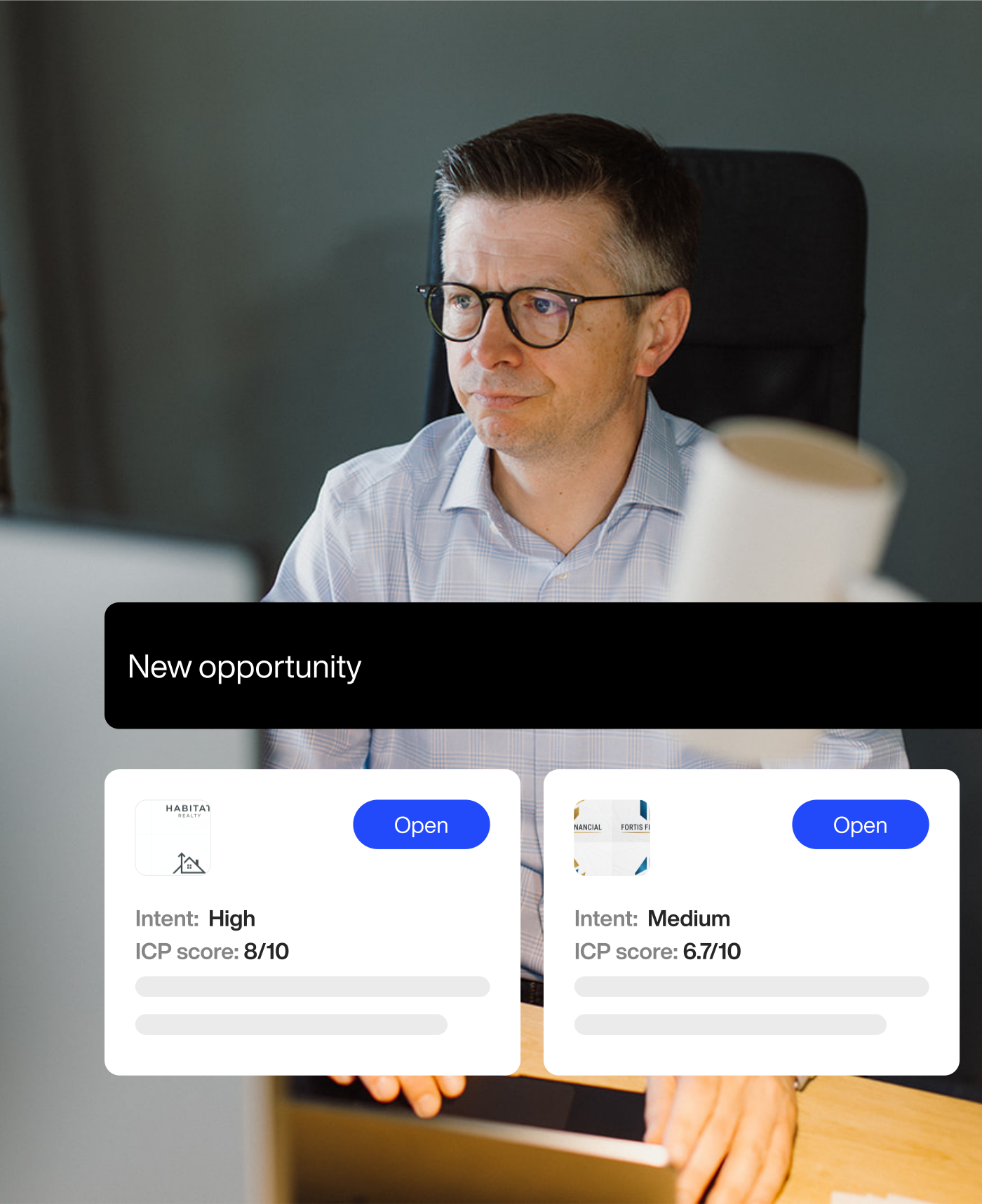
A scoring workflow that ranks every lead automatically. Every company gets an ICP score and an Intent score. The two combine into a ranked list that posts to Slack every week.

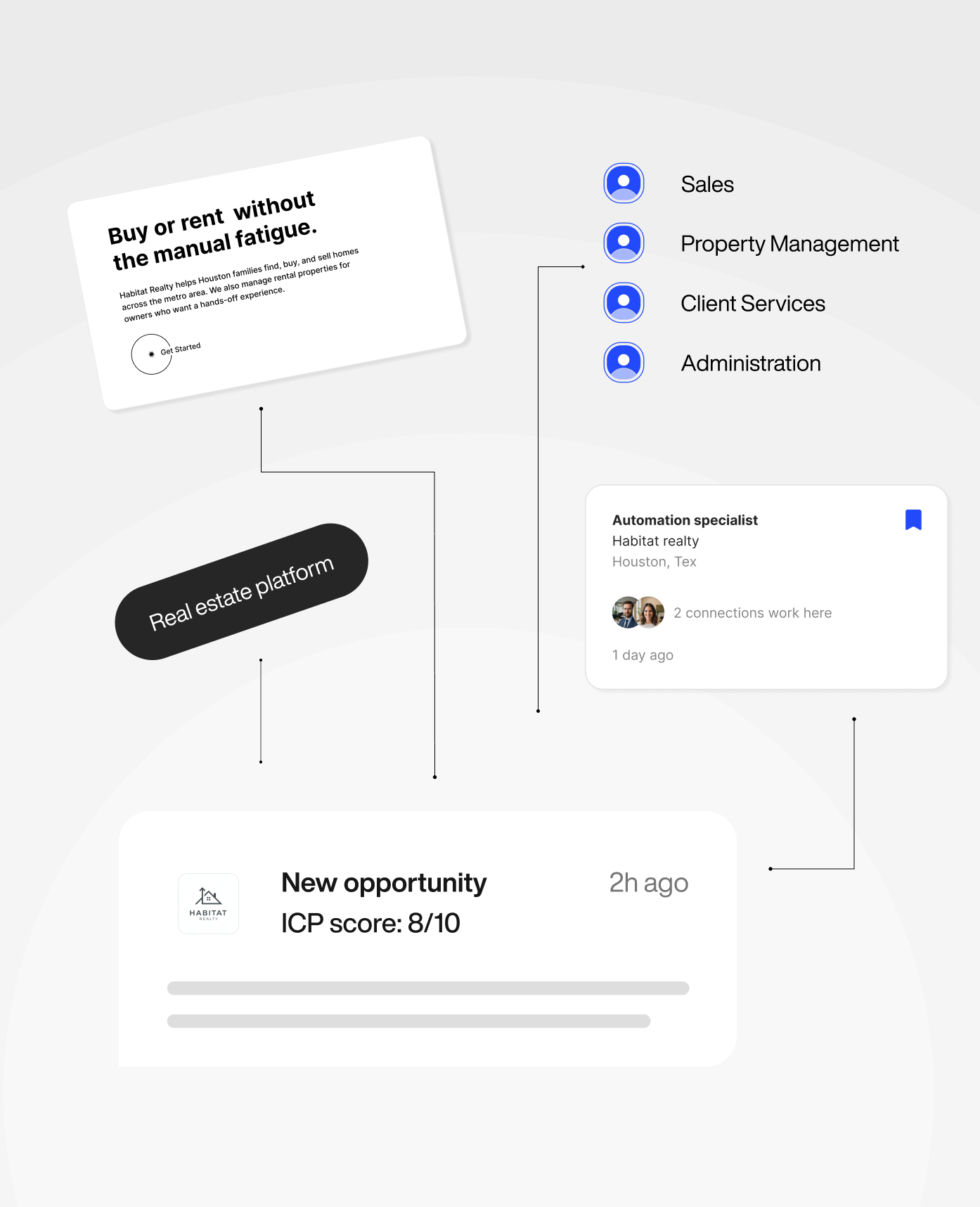
An enrichment engine that fixes bad industry data. It pulls in five signals instead of trusting a single unreliable platform tag, and feeds cleaner data into the ICP score.

A complete company knowledge base built on RAG so reps, and eventually AI agents, can ask a direct question instead of digging through folders.

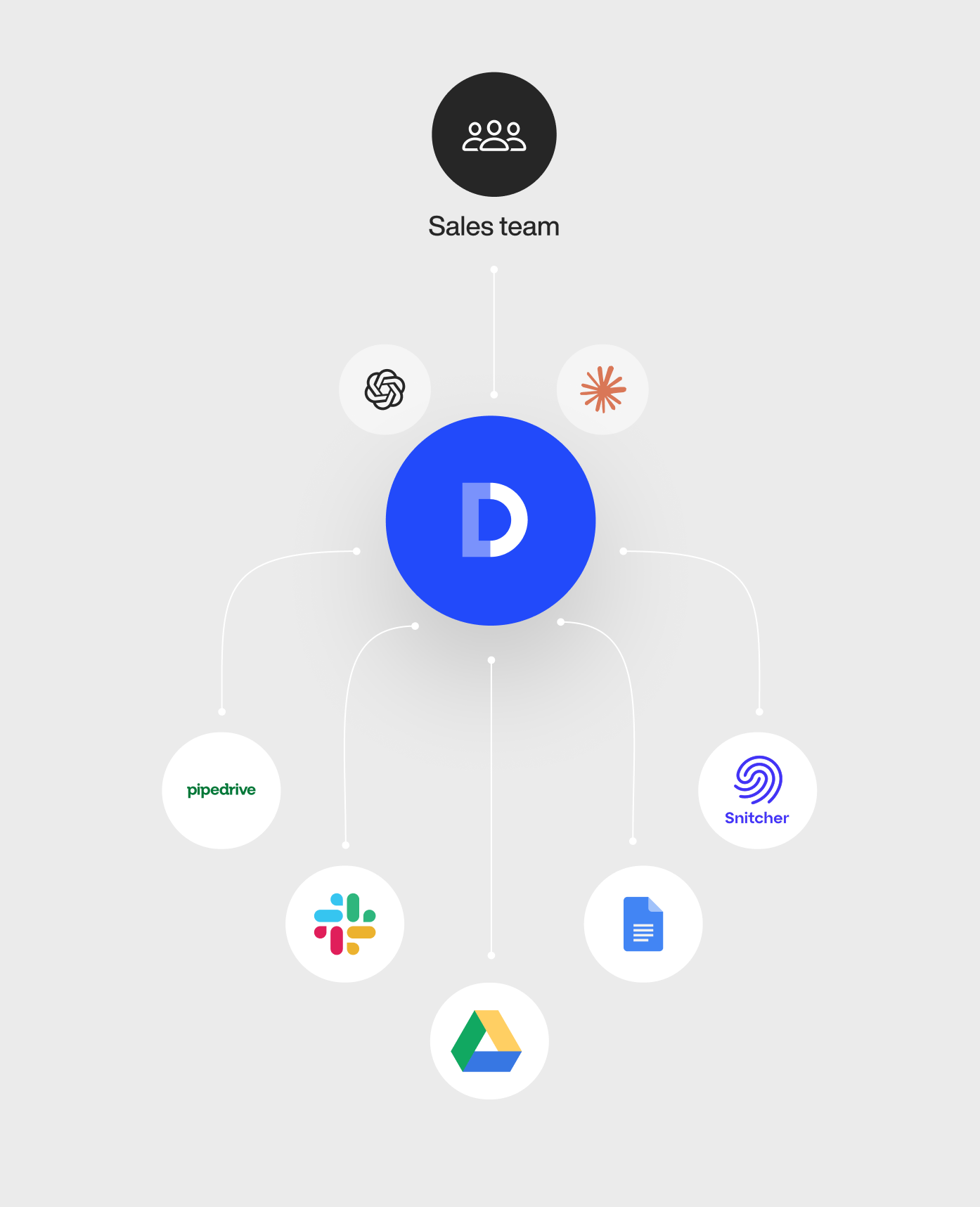
The infrastructure that connects all of it to live CRM data. MCP servers and a central gateway mean any tool the team already uses can pull from Pipedrive in real time.

WHAT WE BUILT — in detail


Lead scoring

This is the solution that answers: who should we contact this week?

Every company in our target universe gets two scores. The first is an ICP (Ideal Customer Profile) score. A measure of how well a company matches the kind of client we most want to work with, across around ten factors: size, what they build, how they’re structured, and so on.

The second is an Intent score, which looks for signals that a company might be looking for a development partner right now. Stuff like job postings for engineers, new product announcements, or other indicators they’re in a building phase.

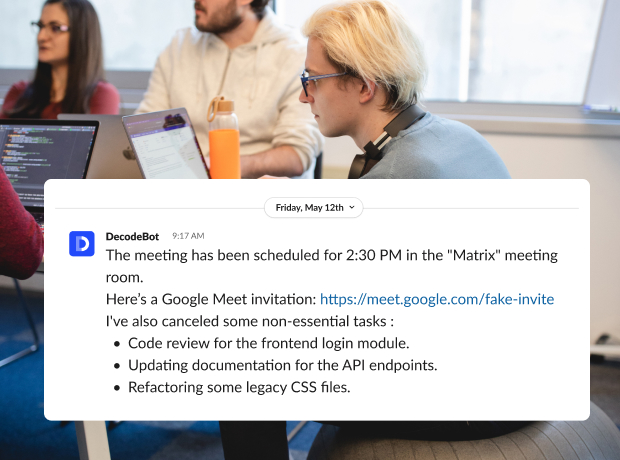
The two scores combine into a ranked list that posts to our Slack channel every week. Each entry includes the company name, key contacts, the scores, and the reasoning behind them.

The result: reps start every Monday already knowing who to contact, and why.

Slack 3 1
Container 2

Industry classification enrichment

This is what fixes the bad industry data at the source.

Instead of trusting whatever label LinkedIn or Apollo assigned to a company, this solution looks at five things:

The LinkedIn tag, the company’s own description, how their departments are structured, the kinds of jobs they post, and what their website says about what they do.

It pulls all of that together and infers what the company does in practice. That feeds into the ICP scoring, replacing unreliable platform tags with something more accurate.

The result: ICP scores based on what a company actually does, not a platform tag that might be wrong.


CRM hygiene system

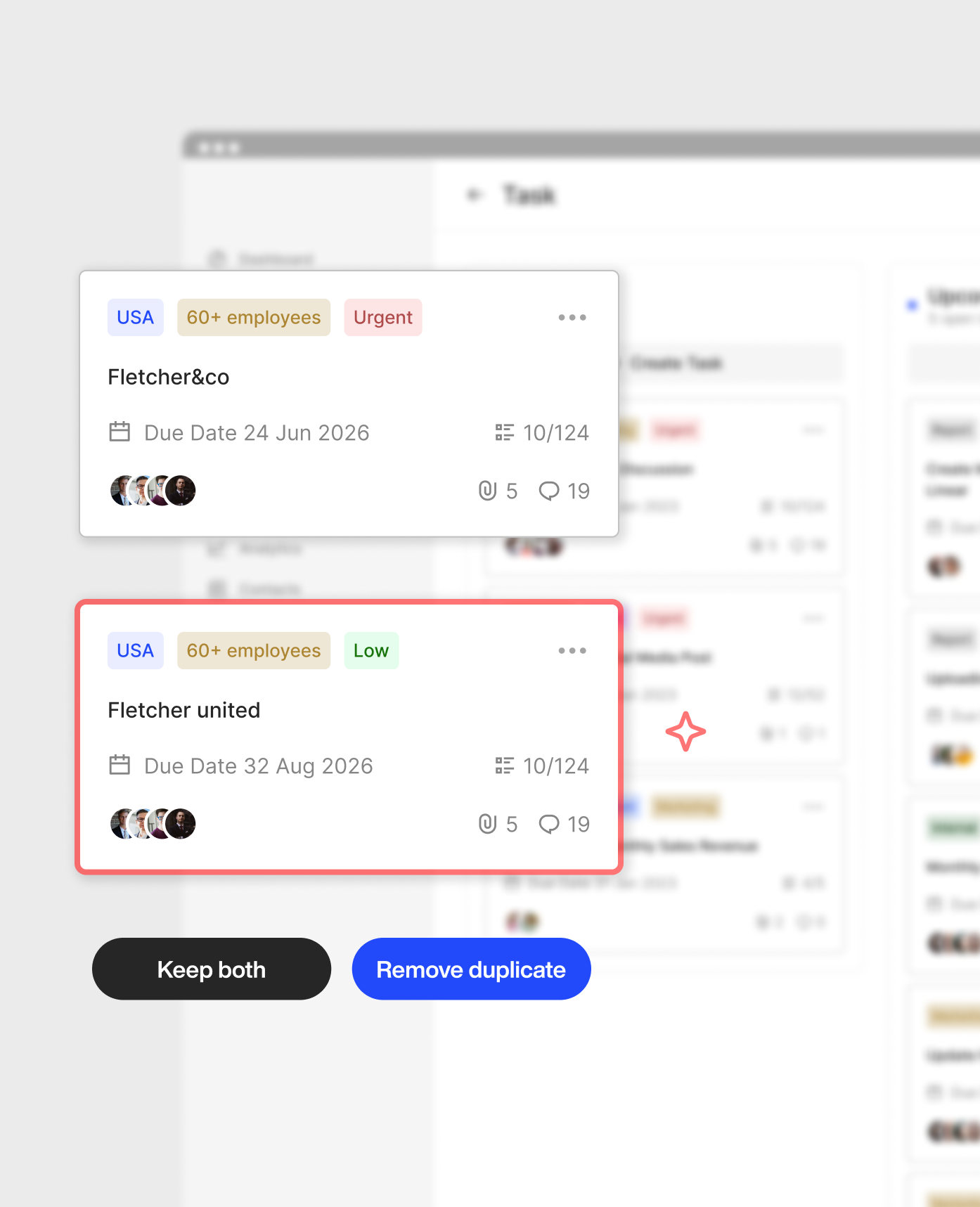
A lot of issues had piled up in the CRM: fields left blank, contracts with no link back to the deal, incomplete profiles, and duplicate companies scattered across the database. Normally, keeping a CRM this size clean is a job in itself.

We built AI to take on that work. The biggest piece was the duplicate backlog: two agents review each potential match independently, catching the near-duplicates a simple script would miss, and only sending the genuinely unclear cases to a human.

The result: a CRM that gets cleaned up continuously instead of piling up for years, with human judgment kept exactly where it’s still needed.

pipe
pipe drive

MCP infrastructure and gateway

MCP (Model Context Protocol) is how AI tools connect securely to external systems like your CRM, Slack, or Google Drive, and access live data from them.

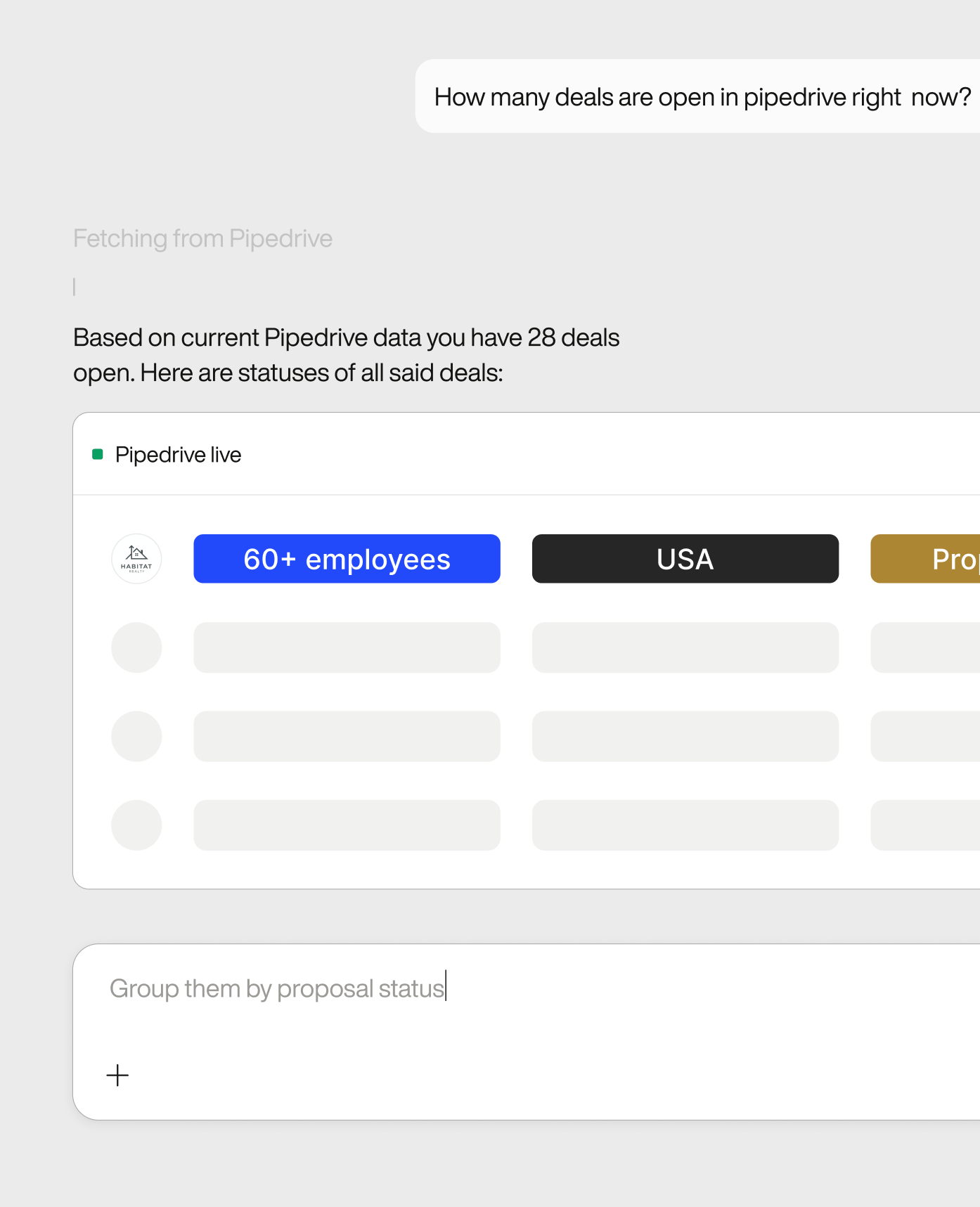
We built MCP servers for the tools our sales team uses every day, then a central gateway that manages who can access what. Authentication runs through our existing Google login, so there’s nothing new for anyone to set up. Add a new tool to the gateway, and everyone who should have access gets it.

The result: any sales rep can ask a question about a prospect and get an answer based on live Pipedrive data.


RAG knowledge base

RAG (Retrieval-Augmented Generation) is how an AI tool answers a question using your own documents, instead of guessing from general training data.

We built a knowledge base from our case studies, sales materials, and internal documentation. Anyone on the team, or an AI agent working on their behalf, can ask a direct question and get an answer sourced from the real thing.

The result: reps get instant, accurate answers about our own case studies and sales materials, without digging through folders or asking around.

rag 1

Outcome

Here’s what’s different now:

Lead prioritization is no longer guesswork. Reps start each week with a ranked shortlist, scores, and the reasoning behind each pick. They know who to contact and why.

The ICP scoring runs on better data. Industry classifications now come from five signals rather than one platform tag that may be wrong. When a company scores well, it’s because of what it actually does.

CRM hygiene stopped being a problem. The cleanup work that used to pile up now happens continuously and automatically, without anyone sitting down to do it by hand.

Nobody has to dig for context anymore. Case details, sales materials, and internal know-how used to be in scattered docs and folders. Now it’s just one prompt away.

AI is now part of how the team works. Reps used to copy-paste context from Pipedrive into AI tools manually. Now they ask questions and get answers from live data, from any device, without any setup.

WANT TO IMPLEMENT AI INTO YOUR BUSINESS? LET’S TALK

Just fill in the short form below, or skip to the bottom to arrange a chat directly with our client strategy specialist. Either way, we’ll be back in touch as soon as we can to arrange an informal call.

Don’t worry, any information you give us will only be stored for business purposes. Find out more in our Privacy Policy.


or
Ivor Cindric

Arrange a chat with Ivor, our client strategy specialist.

More case studies