It gives you a clear path to build your own high-performing, in-house team without having to start from scratch.
In this article, we’ll walk you through how the BOT model works, where it fits (and where it doesn’t), and what it takes to make it succeed long-term.
Let’s dive in!
Key takeaways:
BOT combines outsourcing and ownership. You get the speed and expertise of an outsourcing partner at first, then transition to full control of your own development team.
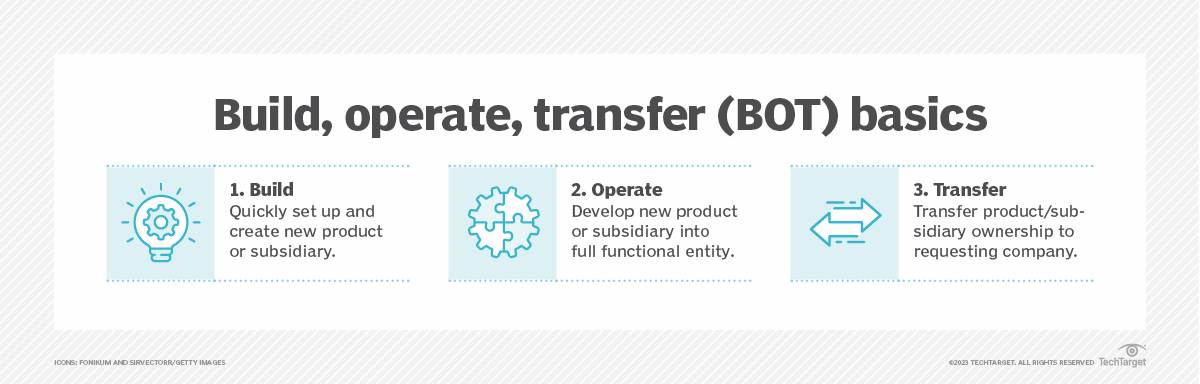
It runs in 3 stages. Build (set up the team and infrastructure), Operate (your partner manages day-to-day work), and Transfer (full ownership shifts to you).
Best for scaling and new markets. BOT works well if you need specialized talent, want to cut costs, or are entering a new region without starting from scratch.
Planning is critical. Success depends on setting clear goals, aligning expectations, and managing knowledge transfer to avoid gaps during handover.
What is the build-operate-transfer (BOT) model in software development?
The build-operate-transfer model is an outsourcing model where a service provider builds, runs, and eventually hands over complete control of a software development operation to you.
It’s a step-by-step process that takes you from working with a partner to fully owning the team, processes, and IP.
Gartner defines the BOT model as: “A contractual relationship in which an organization hires a service provider to set up, optimize and run an IT or business process service delivery operation with the contractually stipulated intent of transferring the operation to the organization as a captive center.”
This hybrid approach gives you the best of both worlds – the flexibility of outsourcing and the control you get with an in-house team.
As the name suggests, the model works through 3 distinct stages: Build, Operate, and Transfer:
During the build phase, your service provider puts together a dedicated team and sets up the infrastructure in your chosen location.
The operate phase is where the provider handles the daily operations while bringing your team on board with your processes and fine-tuning their performance.
Finally, in the transfer phase, complete ownership shifts to you, and you end up with your very own captive development center.
Building a team from scratch is hard. We’ll do it for you. Let’s talk →
You’ll be talking with our technology experts.
The build-operate-transfer concept didn’t start in software development. It started with big infrastructure projects and public-private partnerships.
Governments tapped into private sector know-how to build and run major projects (roads, bridges, power plants) before eventually taking over.
The tech world took these ideas and tweaked them to solve ongoing software development headaches like:
Talent shortages
The need for specialized skills and expertise
High development costs
Expansion into new markets
In short, BOT gives you a clear path to building your own high-caliber development team without starting from zero and doing all the heavy lifting yourself.
You get expert support at the start, avoid the usual growing pains, and take full ownership once everything’s running smoothly.
And that’s why it’s a good choice.
Stages of the BOT model
Here, we’ll discuss each stage of the BOT model in detail.
Build
The build phase lays the ground work for everything that comes next.
If you get it right, the rest of the BOT process runs a whole lot smoother – so planning and execution here really do matter.
Every BOT project needs to start with thorough planning. And it needs to go way beyond basic project scoping.
You team up with your provider to set:
Clear goals – Build a mobile and backend team in Eastern Europe, expand into a new market, and gradually shift development in-house.
Deliverables – A fully hired and onboarded team, office setup in the target location, security and compliance infrastructure in place.
Timelines – Team assembled within 6–12 months, initial product delivery within 12–18 months, full transfer phase starting in year 2.
Success metrics – Team retention above 90%, predictable sprint velocity, knowledge transfer completed before the handover
This planning is all about figuring out what successful ownership looks like when you’re done.
When defining the scope, you’ll need to identify the specific technologies, methods, and team culture you need to succeed.
You’ll then set up service agreements that match your quality standards and performance expectations.
It’s crucial that both sides align on the big-picture vision, not just the day-to-day tasks.
Every decision made during building and operation needs to support your eventual ownership goals.
This phase also means choosing the best location for your development center. You’ll need to weigh factors like:
Available talent
Costs
Time zone compatibility
Your long-term business strategy
Your BOT partner then handles building the core team that will eventually become your employees.
They find and recruit the best candidates based on your tech needs and company culture.
They also set up the infrastructure you need – everything from physical offices and IT systems to security protocols and legal entities.
And from day one, the team works under your brand, building the trust and commitment you need for long-term success.
Operate
Your BOT partner doesn’t just deliver projects – they manage your entire operation from top to bottom.
They’ll supervise your team, handle HR stuff, make sure everyone’s performing at their best, and help you scale when the time’s right.
After all, they’re eventually going to become an actual part of your company – they’re not some random outside contractors you’ve hired for a one-off job.
Here’s what they do during this phase:
Manage your team’s performance and workflows
Handle HR processes like payroll, contracts, and benefits
Recruit and onboard new team members
Help you scale when needed without disrupting delivery
When you need more people, they’ll take care of finding them, bringing them up to speed, and making sure they fit right in.
But here’s the important part – they’re focused on building something that’ll work for you long after they’re gone, not just putting out today’s fires.
The whole BOT approach is about creating systems that last.
Your provider will bring in smart ways of doing things, help you work more efficiently, and set up frameworks that’ll keep everything running smoothly after you take over the reins.
Transfer
The transfer phase is where your BOT investment finally pays off.
It comes down to smart planning, solid prep, and keeping things steady while you get real value out of the setup.
Now, the transfer isn’t something that happens overnight.
You use a step-by-step approach that gradually shifts ownership, control, assets, intellectual property, and staff contracts to your organization.
This cuts down on the risks and keeps everything running smoothly during the transition. Here’s what that usually includes:
Early transfer of non-critical tasks (e.g. admin or support functions)
Regular check-ins to make sure the team’s ready
Structured knowledge transfer in each phase
Gradual shift of management responsibilities to your internal leads
Legal and HR handover of contracts, benefits, and payroll
Final transfer of infrastructure and core IP once everything’s stable
The timing and scope aren’t fixed – you can adjust it based on how ready you are and what makes the most sense for your business.
Some companies speed up the transfer when market conditions change to bring things fully in-house. Others take it slower to make sure the team is solid and the knowledge sticks.
And remember, your relationship with the BOT provider doesn’t just end when the transfer’s done.
Most BOT agreements include post-transfer support to help your team settle in.
The support gradually winds down as your internal team gets stronger, but the relationship stays open. That way, you can tap into expert help when you need it.
Build-operate-transfer model vs. other outsourcing models
Traditional outsourcing and BOT serve different strategic purposes.
The key difference comes down to who owns what and who’s really in control.
With traditional outsourcing, the vendor keeps more control. You get the output, but not the capabilities behind it.
BOT flips that. From day one, the team works under your brand, follows your processes, and gets to know how your company operates.
Here’s a more detailed comparison:
Build-operate-transfer (BOT) vs. traditional outsourcing: overview
Category
Build-operate-transfer (BOT)
Traditional outsourcing
Ownership
You take full ownership of the team and processes after the transfer phase
The vendor owns the team and delivery
Long-term control
Full control over the team and product after transfer
Limited control, you depend on the vendor
Team integration
The team gradually becomes part of your in-house team
The team stays external, pure vendor-client relationship
Knowledge transfer
Built-in handover plan ensures you keep all product and process knowledge.
Knowledge stays with the vendor unless you explicitly plan for a handover.
Scalability
Scales with your goals, you’re building your own in-house capability
Can scale quickly, but long-term growth depends on the vendor’s capacity
Flexibility
Plenty of flexibility early on, with a plan to take full ownership down the line.
Flexible short-term, but you’re always reliant on the vendor
Cost over time
Higher upfront cost, but lower long-term costs after transfer
Lower upfront cost, but fees add up over time
Now, BOT is more complex than traditional outsourcing. But that extra effort pays off.
Remember, you’re not just outsourcing tasks – you’re building a team that will eventually become a part of your company.
If your long-term goal is to bring development in-house and build real capability, BOT gives you the structure to do it without the usual growing pains.
Traditional outsourcing can be great for short-term delivery, but if you’re aiming for ownership and long-term impact, BOT is the better bet.
The main reason why? Lower hourly rates in the top outsourcing regions.
Here’s a look at the average hourly rates by role and region:
Average hourly development rates by role and region
Region
Software engineer
Solution architect
UX/UI designer
Project manager
Western Europe
$120-150
$150-200
$90-130
$110-160
Central Europe
$40-55
$60-80
$35-50
$45-65
Eastern Europe
$30-50
$45-65
$25-40
$30-55
Asia
$20-50
$30-70
$18-40
$25-50
North America
$100-150
$120-200
$80-120
$90-140
Latin America
$25-50
$40-70
$20-40
$30-55
Africa
$20-50
$30-70
$20-40
$25-55
And your BOT partner handles all the tedious stuff – setting up facilities, deploying infrastructure, and finding talent.
This comes in handy when you’re entering a new market or working with tech you haven’t used before.
Plus, when ownership transfers in a BOT model, you hit a financial sweet spot.
You shift from paying external service costs (with their profit margins baked in) to managing your own operational costs in a cheaper part of the world.
This makes your expenses more predictable and frees you from vendors who might jack up their rates over time.
On top of that, your ROI improves as the team settles in and starts running efficiently under your control.
Risk mitigation
BOT spreads risks across the different stages, giving you cover during those shaky first months while setting you up for full ownership down the road.
In the build phase, your provider takes on the brunt of the work, letting you focus on what your business does best.
And during the operate phase, they handle the day-to-day challenges while showing your future team the ropes and onboarding them to your tools and culture.
With your provider managing performance, quality, and operational risks early on, you’re much less exposed to project failures and more likely to succeed.
Having local know-how really cuts down risks when you’re trying to break into unfamiliar markets. A BOT provider who knows the lay of the land knows how to deal with:
Tricky regulations
Employment laws
Compliance requirements
Cultural nuances
This will help you avoid compliance mistakes, bad hires, and cultural missteps that could set you back months if you go at it alone.
The BOT model helps you lower risk by taking things one step at a time.
You don’t need to commit to everything upfront – you build the team gradually, check what’s working, and adjust along the way.
And the best part? You keep the talent and the knowledge.
In most outsourcing setups, that expertise stays with the vendor. With BOT, it becomes yours.
Full control over the development process
Control is really what makes BOT stand out from other outsourcing options.
You keep or gradually take over control of who’s on your team, how processes work, your intellectual property, and operational standards throughout your working relationship.
This control lets you deeply integrate the team with your existing systems, processes, and company culture.
They don’t operate like outside contractors following someone else’s playbook – they work as your own employees, using your approaches and standards.
This builds the kind of consistency and focus you need to stay on track and reach your long-term goals.
And when it comes to intellectual property, you have complete control:
You own all the code, docs, and IP from day 1
No grey areas around ownership
No vendor lock-in
Handover is clean and risk-free
Everything the team builds belongs to you from the moment it’s created.
Your control also extends to setting strategic direction and priorities.
As teams become part of your organization, they align with what your business needs rather than what some vendor wants.
This alignment leads to better outcomes and makes sure development work actually supports your competitive advantages.
Scalability and flexibility
The BOT model offers great scalability through its step-by-step approach and ability to adapt to your needs.
You can ramp operations up when business is booming or scale back during slower times, with the freedom to speed up or stretch out each phase as market conditions change.
The model fits all kinds of business situations and timelines.
Some companies wrap up their transfers in just 12-18 months, while others keep the operate phase going for years to ensure full knowledge transfer and team stability.
This is why it works well whether you’re risk-averse or ambitious with your strategic goals.
Geographic expansion is another big plus.
Once you’ve successfully implemented BOT in one location, you can use that blueprint to expand into new markets or regions.
And all the know-how and processes you developed the first time around will make future expansions much faster.
Challenges and limitations of the BOT model
Finally, we’ll go over some of the challenges and limitations of the BOT model.
Cultural and communication barriers
Cultural differences can quietly derail a BOT setup if you don’t plan for them.
When your team spans multiple countries, languages, and work styles, misunderstandings are almost guaranteed – especially around how people communicate, make decisions, or approach deadlines.
Even if everyone speaks the same language, subtle gaps in tone or meaning can cause issues.
And over time, small miscommunications can snowball – whether you’re talking strategy, tech specs, or day-to-day feedback.
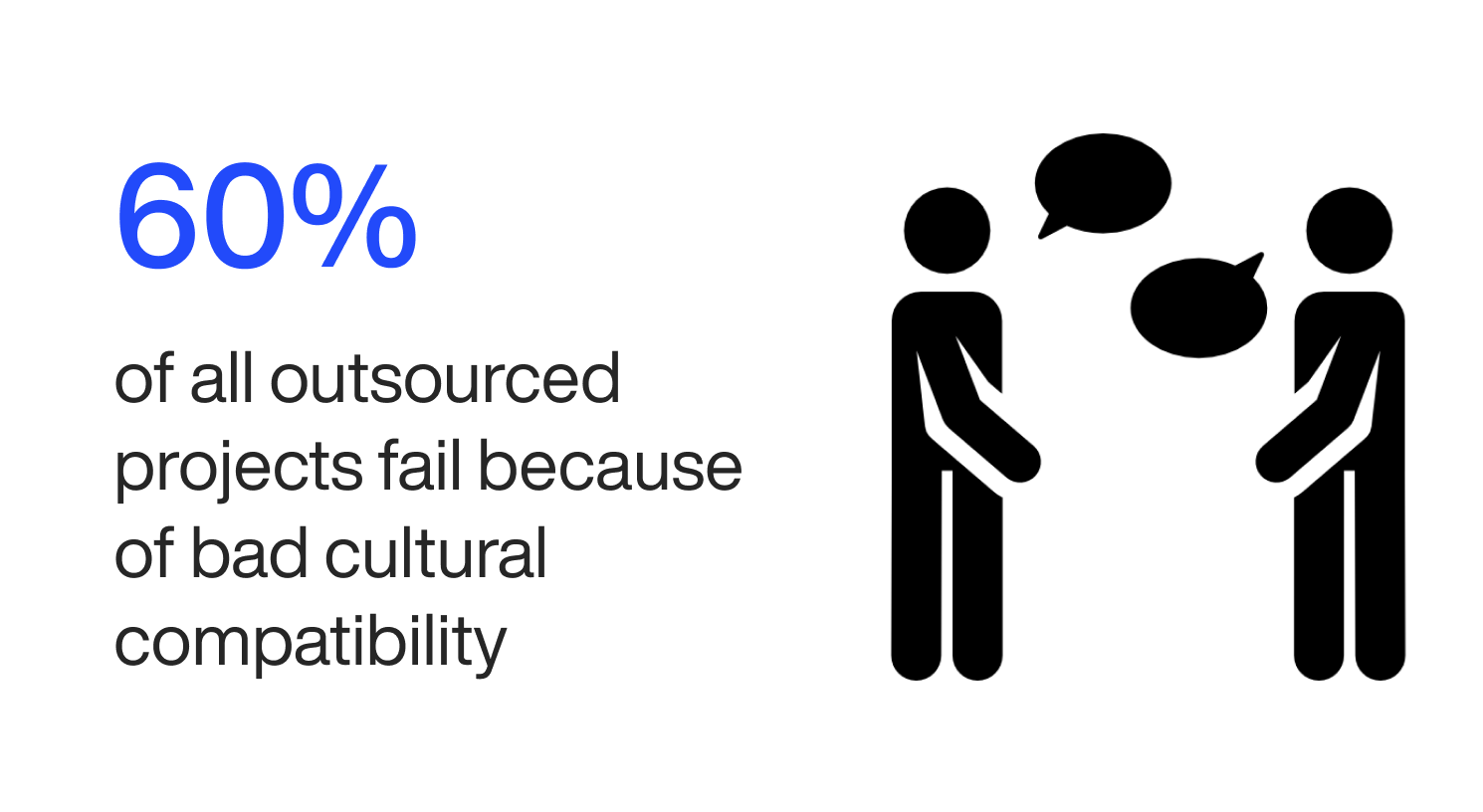
So, it’s not surprise that a huge chunk of outsourced projects fail because of cultural barriers:
Time zone gaps also really complicate how teams work together and make decisions day-to-day.
Sure, global teams give you extended working hours, but they also slow down decision-making if you’re not careful about how you coordinate.
The upside of global teams is you get longer working hours, but you’ve got to be thoughtful about coordination to everything moving in the right direction.
When it comes to BOT projects, you can’t just hope cultural integration happens on its own – you need to actively work at it from start to finish.
This means investing in cultural training, setting up clear communication channels, and helping everyone on the team understand each other better.
Before you even start building, you’ll likely spend tons of time digging through different legal requirements, regulations, and hammering out detailed contracts.
Setting these up can be a headache. Here’s what you’ll need to pay attention to:
Local company registration
Labor and employment laws
Tax and accounting requirements
IP protection across jurisdictions
Data privacy and security
Of course, your partner will help you with much of this, but you still need experts who know what they’re doing to avoid legal troubles down the road.
The money side can be tough, too. A big chunk of your early budget goes to setup costs before you write a single line of code.
You’ll need to pay for feasibility studies, legal paperwork, financial planning, and legal compliance.
When it comes to contracts, expect complex negotiations around risk sharing, performance management, how to handle disputes, and managing changes.
These agreements get complicated because BOT relationships are very complex.
And all this back-and-forth can slow down your start date and create more admin work.
Legal and IP risks
Intellectual property protection becomes complex when assets, knowledge, and personnel transfer between companies in different legal jurisdictions.
Without strict contractual controls, in the worst case scenario, you might face potential IP theft, data leaks, or ownership disputes.
And data security risks also multiply when sensitive information moves between organizations and across borders.
Different countries have varying data protection regulations, privacy requirements, and security standards that you need to carefully manage throughout the engagement.
During the transfer phase, the legal risks usually come down to employment laws, updating contracts, and moving assets over the right way.
Each jurisdiction has specific requirements for transferring employees, IP, and business operations you need to follow to the letter to make it legally sound.
If you don’t get this right, it can throw the whole thing off.
BOT model in software development: FAQs
Most BOT engagements run for 12-24 months, depending on the size and complexity of the team you’re building. Here’s what that usually looks like:
Build phase– We hire and onboard the initial team (3-6 months).
Operate phase – Your team works under your direction while DECODE handles HR, payroll, and day-to-day operations (6–18 months).
Transfer phase – You take full ownership of the team, processes, and IP.
We tailor the engagement to your goals. If you want to scale faster or grow gradually, we’ll adjust the timeline to fit your plan.
You stay involved from start to finish.
It’s your team, your standards, and your goals – the BOT model just gives you the structure and support to build it the right way.
Build phase: You help define the team structure, approve hiring profiles, and align on goals, timelines, and technical direction.
Operate phase: You stay close to day-to-day performance through shared dashboards, regular check-ins, and access to the team. Your provider runs the operation, but you still guide priorities and key decisions.
Transfer phase: You take over fully, but with a team that’s already working your way. All the tools, knowledge, and processes are already in place and are already yours.
You get control where it counts, without getting buried in logistics.
The BOT model makes the most sense for companies that want to expand for the long haul.
If you’re planning to grow in new markets, need to build long-term capability, or want more control than traditional outsourcing gives you, BOT is a strong fit.
It’s also ideal if you value owning your IP, culture, and processes from the inside.
At DECODE, we’ll build and operate your BOT team from our engineering hub in Croatia, giving you a dedicated, fully aligned team that works as an extension of your company.
You’ll stay in control while we handle setup, operations, and delivery until you’re ready to take over.
Croatia offers access to exceptional engineering talent, a strong tech ecosystem, and great cost efficiency, making it one of the best places in Europe to scale your team.
But if your goal is to build real, long-term capability without starting from scratch, it’s one of the smartest ways to do it.
And we can help you get there.
We’ll help you set up your team and deal with all the complexities of hiring a high-caliber development team: recruitment, onboarding, setup, and more.
And when the time comes to take over, you’ll already feel like the team was yours all along.
If you want to learn more, feel free to reach out and we’ll arrange a chat to discuss your needs in more detail.
Mario makes every project run smoothly. A firm believer that people are DECODE’s most vital resource, he naturally grew into his former role as People Operations Manager. Now, his encyclopaedic knowledge of every DECODEr’s role, and his expertise in all things tech, enables him to guide DECODE's technical vision as CTO to make sure we're always ahead of the curve.
Part engineer, and seemingly part therapist, Mario is always calm under pressure, which helps to maintain the office’s stress-free vibe. In fact, sitting and thinking is his main hobby. What’s more Zen than that?