It can feel uncomfortable for developers. When there’s no project to jump into, it’s easy to feel underused or worry about what comes next.
We wanted to fix that.
So we built a structured R&D process that gives developers clear direction when they’re between projects.
In this article, we’ll walk you through how the process works day to day, what developers actually do during R&D, how we adapt it to different experience levels, and how it makes every client project stronger from the start.
Let’s dive in!
Key takeaways:
We give bench time real direction. R&D turns the time between projects into focused work, learning, and contributions that move the whole company forward.
We invest in the foundations that speed up delivery. Boilerplates, shared libraries, better handovers, and cleaner standards all come out of R&D, helping every new project start faster and smoother.
We help our developers grow in ways client work doesn’t always allow. People explore new technologies, earn certifications, try new domains, and push improvements that strengthen how we work as a team.
We make every client project stronger from day one. Our developers start new projects warmed up, confident, and equipped with tools and knowledge they’ve built during R&D.
We didn’t want our developers on the bench to just wait for the next project and fill the gap with ad-hoc tasks. Not only does this create anxiety about their future, it’s also a loss to the business.
So we turned bench time into something meaningful. We built a structured R&D process that runs like any other project in the company.
100+ projects delivered. We’re ready for yours. Let’s talk →
You’ll be talking with our technology experts.
It has clear goals, planning, tracking, and ownership. And most importantly, it gives every developer a clear path forward.
Here’s how it works: our leadership defines high-level strategic goals. Then, we translate those goals into quarterly R&D initiatives for each department.
Finally, team leads match those initiatives with each developer’s growth plan.
The result is simple. When someone’s on the bench, they’re contributing, learning, and building assets we’ll use for years.
How our R&D process runs day-to-day
Everything starts with our quarterly goals. Leadership sets the direction, while team leads turn that into clear tasks.
Each goal becomes an Epic in Jira. From there, we break it down into tasks for teams and individual developers.
When someone enters the bench, they step into R&D right away. They get a defined Epic, weekly expectations, and tasks that match their skill level and growth plan.
They track time the same way they would on a client project and share weekly status updates.
Team leads stay close to the process.
They help developers choose tasks, help them when they get stuck, and make sure the work is in line with the quarterly goals.
This gives the work structure but still leaves room for personal initiative, especially for seniors who often shape their own R&D projects.
What our developers work on during R&D
Our developers choose work that fits their skills and their growth plan. But, the work always ties back to the company’s long-term direction.
Here’s what that looks like in practice.
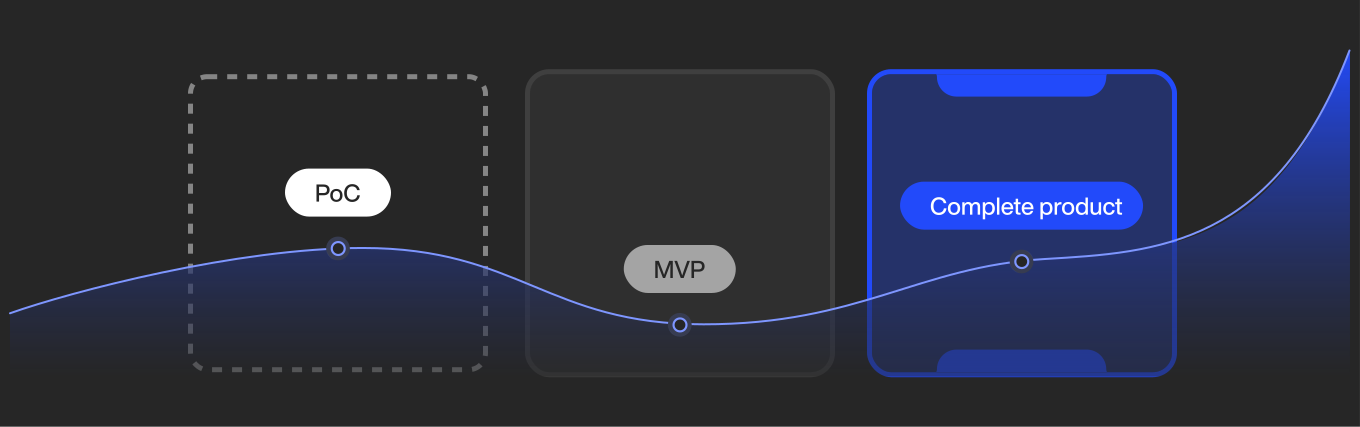
Presales support and POCs
Presales is an important part of our R&D work.
When a potential client needs to see a proof-of-concept (POC), we can respond quickly because someone on the bench can jump in and build it.
These POCs are short and focused. Their goal is to validate a technical approach or show that we understand the problem before building a full-fledged product
This often makes the difference between winning or losing the deal.
This work also helps our developers grow their skills.
They get a taste of new domains, try new tools, and solve interesting problems without the long timelines that come with full projects.
It keeps them sharp and strengthens their ability to explain their thinking. And it prepares them for future conversations with clients.
Presales tasks also build confidence.
Developers see that their work directly impacts the company’s pipeline, which adds a strong sense of ownership and purpose during bench time.
Internal tools and automations
Internal tooling is a core pillar of our R&D process.
Developers use this time to improve how DECODE works behind the scenes. They explore new tools, automate slow or repetitive tasks, and document workflows that aren’t clear yet.
The goal is always the same: make our day-to-day work more efficient, predictable, and enjoyable.
For example, a QA engineer who is on R&D will research new testing tools, explore automation options, and refine QA processes.
This creates a long-term impact because better internal tooling leads to fewer bugs, more consistent delivery, and simpler onboarding for new team members.
One well-designed internal tool can support dozens of projects and save hundreds of hours.
And R&D gives us the breathing room to build them properly.
Upskilling and onboarding to new technologies
R&D gives developers structured time to grow their skills.
They use this time to learn new technologies, try new tools, and deepen their understanding of the domains we work in.
A big part of this upskilling is technical exploration.
Developers can test new frameworks, build small prototypes, or even switch stacks entirely.
Web developers might explore mobile development frameworks, while backend developers might try out cloud-native tools.
R&D gives them the freedom to do this without the pressure of a client deadline.
They also use this time for structured learning, like:
Studying for platform or cloud certifications
Exploring new frameworks
Building small demo apps
Building internal presentations to share what they’ve learned
Researching domains we expect to grow in
This keeps our team adaptable.
Our developers enter new projects with more confidence because they’ve already explored the tech or domain beforehand.
And our clients get teams who stay ahead of the curve instead of catching up on their time.
Product and design standards
Good product and design standards reduce friction. A lot of our R&D work focuses on making sure our teams can start every project with the same strong foundation.
Developers and designers use this time to define better collaboration practices, clean up handover processes, and create documentation that clarifies how we work together.
One big area here is our design system work. We build and refine Storybook components we can reuse across different projects.
This removes guesswork when we start a new project. Designers and developers share the same components, so everything stays consistent and we reduce unnecessary back-and-forth.
These small improvements in standards add up. They save time and make collaboration smoother and more predictable.
And they set a clear bar for quality across the company.
Reusable boilerplates and internal libraries
We invest heavily in reusable code. R&D is where that work happens.
Our devs build boilerplates, libraries, and internal repositories that give future projects a strong head start.
These assets help us move faster without cutting corners.
A good example is our Next.js backend boilerplate. It gives teams a reliable setup right out of the box.
We also maintain reusable UI libraries, shared design system code, and standardized backend patterns. All of these reduce the time needed to set up a new project.
More importantly, they reduce mistakes.
Developers don’t have to reinvent the wheel. They start from a stable base and can focus on solving the actual problem.
How we adapt R&D based on seniority level
We don’t treat R&D as one-size-fits-all.
Each developer gets a plan that fits their career stage, strengths, and long-term goals. This creates a better balance between what the developer needs and what the company needs.
Juniors
For juniors, R&D is structured and hands-on. They work in setups that feel like real projects, with tasks in Jira and clear expectations.
They learn how our workflows work. They get used to Git, task ownership, and delivering work they’re proud of.
They also explore topics outside their daily skills and learn how to present their work.
Presentation skills matter. Juniors often meet clients early in their careers, so we help them get comfortable speaking about their decisions and showing their progress.
This time also helps us understand their mindset. Some juniors show a natural talent for product thinking or project management. R&D gives them space to explore that.
Mids
Mids want to code and ship things. R&D leans into that.
They get deep technical tasks and internal projects where they can focus and deliver value without client pressure.
This keeps their technical skills sharp and gives them a sense of progress.
Their work often becomes part of our internal foundations, like tooling, libraries, and automations.
In other words, they get to directly contribute to how DECODE works.
Seniors
Seniors use R&D a little differently. They dig into new technologies, try out ideas they’ve been thinking about, and take on work that lifts the wider team.
Some switch tech stacks. Others prepare for certifications or build content for talks and meetups.
R&D is also when seniors push improvements they believe will make our work better.
They propose firm-wide improvements, lead new R&D Epics, and shape standards for their departments. This helps us grow and helps them strengthen their leadership skills.
Many of our seniors enjoy this time because it breaks the routine of long client projects and lets them explore new things.
How our R&D process benefits our clients
Our R&D work pays off directly in client projects.
When our developers join a new project, they’re not starting from zero. They’re already warmed up.
Here’s what that means for you:
Developers who stay sharp – Our engineers don’t sit idle on the bench. They code, research, experiment, and learn. So they’re ready to jump in the moment your project starts.
Stronger technical foundations – Like we mentioned earlier, a lot of R&D time goes into building boilerplates, shared libraries, design systems, and documentation. These foundations give every new project a cleaner, more stable starting point.
Faster project starts – Because we already have solid starting points, our teams can begin delivering value sooner. Sometimes we start with as much as 30% of the technical groundwork already done.
Better collaboration across teams – Because we sort out our handovers and standards in R&D, your project benefits from smoother teamwork and fewer misunderstandings
Teams ready for new technologies – Our devs often explore new stacks, tools, or domains while in R&D. That makes it easier for us to support projects that need something new or want to evolve their tech.
Better support during presales – When you need a quick proof-of-concept or a technical deep dive early in the conversation, someone in R&D can jump in and build it.
This is why R&D matters.
It helps our people grow and gives every new project a stronger starting point.
And clients feel that difference as soon as the work begins.
DECODE R&D process: FAQs
It depends.
Some developers are in R&D for as little as a week before they get assigned to a new project. Others stay a bit longer when there’s more space between projects that require their expertise.
But, what matters is that they have direction. A developer in R&D is learning, building useful things, or supporting presales.
And when the next project starts, they step in ready and confident, not rusty or anxious from waiting around.
No. It actually helps us deliver faster.
The tools, standards, and boilerplates we build during R&D make new projects easier to start.
Our developers walk into a cleaner setup, with clearer handovers, and fewer early surprises.
And instead of spending days or even weeks getting the basics in place, they can focus on the real work much sooner.
We look at whether the work made a real difference:
Did we build a boilerplate that we can reuse on several projects?
Did someone earn a certification or learn a new technology that supports company goals?
Did we fix a workflow that was slowing people down?
Did we support presales with a POC that helped us win a project?
If the answer is yes, that R&D cycle was a success. These things are practical and immediately useful, so the impact is easy to see.
Looking for a high-caliber development team?
Great engineering comes from teams who keep learning and stay curious, no matter what they’re working on.
That’s exactly why we built our R&D process.
At DECODE, our developers continuously learn, experiment, and build the foundations that help us deliver better work for our clients.
So when our team joins your project, they’re coming in prepared, confident, and already warmed up.
If you’d like to work with a team that treats growth and quality as part of the job, let’s talk. We’ll set up a quick call, learn about your goals, and show you how we can help you reach them.
Tarek is our go-to expert for all things JavaScript, especially React. A proud graduate of the University of Zagreb’s Faculty of Organization and Informatics, he’s honed his craft on some of our toughest projects while managing to lead our JS team at the same time. Pretty impressive, right?
Outside the office, you’ll find him dominating in Dota 2 and Counter-Strike. He'll also often daydream about his ideal workspace in the picturesque hills of Zagorje near Trakoscan castle with a Starlink connection, so he's always ready for action.