So, you want to cut development costs but aren’t sure if offshore software development is the right fit for your business?
Well, you’re in the right place.
Of course, lower costs are the main benefit of offshoring – but, it has plenty of other benefits, too.
Here, we’ll discuss the top 7 benefits of offshore software development and how it can help your organization.
Let’s dive in!
Key takeaways:
Offshore development cuts costs by 40-70%, but the stronger argument in 2026 is talent access. Cost has dropped from 70% to 34% as the primary outsourcing driver (Deloitte 2024), with specialized talent now taking the top spot. With 47 million active developers worldwide, you also gain a cognitive diversity benefit that’s easy to overlook: Harvard Business Review research found cognitively diverse teams adapt better to change and solve problems faster.
Offshore teams are far easier to scale than in-house, in both directions. When a product gains traction you can grow capacity quickly without recruitment or office expansion; when the workload eases you scale back without layoffs. For companies with unpredictable growth trajectories, that flexibility has real value.
Hiring the right offshore vendor is actually lower risk than building a team from scratch. An experienced development company has already solved the process problems that trip up first-time builders, like project management, QA, and technical risk identification.
Let’s quickly cover the basics first – what is offshore software development?
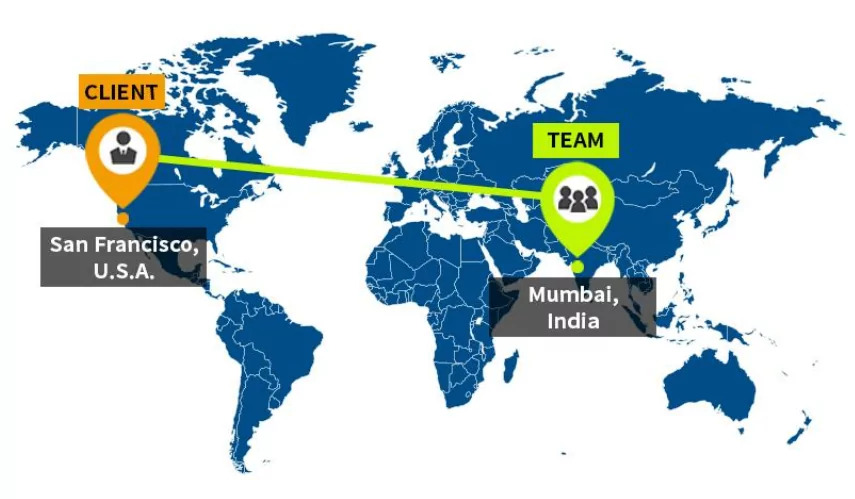
Offshore software development is when you outsource development to a company or team in a different country – specifically a country that’s geographically far away from you.
So, if you’re a Silicon Valley startup and you hire a team of engineers from India or Ukraine, that counts as offshoring.
But, there’s one thing you should keep in mind – offshoring development doesn’t mean you just hire a couple of engineers and call it a day.
There are several outsourcing models you can choose from:
Full project outsourcing– Your offshore team handles the entire software development lifecycle, from gathering requirements all the way through to post-launch maintenance and support.
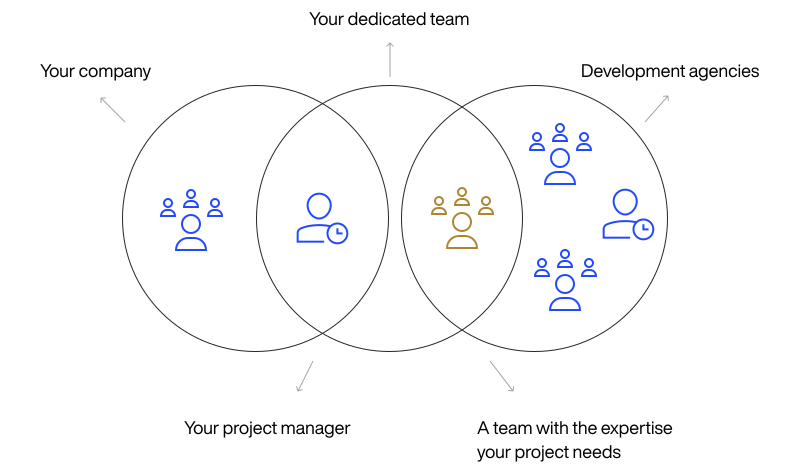
Dedicated team – A team of engineers that works ex.clusively for you on long-term projects that functions just like an in-house team
Extended team – A team of engineers you hire to augment your in-house team on specific projects or to address skill gaps.
This way, you’ll get a well-rounded team that knows how to build a successful software product – at a fraction of the cost of an in-house team.
And that’s why offshoring is so popular.
7 benefits of offshore software development
Now, we’ll cover the top benefits of offshore software development in detail.
Lower development cost
Lower development costs used to be by far the biggest draw of offshore software development.
But, according to Deloitte’s 2024 Global Outsourcing Survey, cost reduction has dropped sharply as the primary driver for offshore development – down to 34% from 70% in 2020.
Access to specialized talent has overtaken cost as the leading reason companies outsource.
Still, lower costs are a major benefit.
On average, offshoring development reduces costs by 40-70% compared to in-house development, depending on the region, team seniority, and engagement model.
Of course, the main reason is lower labor costs.
And when you outsource to Europe, you get highly-skilled engineers with great technicalandEnglish skillsat an affordable rate.
Average hourly development rates by role and region
Region
Software engineer
Solution Architect
UX/UI designer
Project manager
Western Europe
$100-160
$130-220
$80-140
$100-160
Central Europe
$30-65
$45-90
$25-55
$35-70
Eastern Europe
$25-55
$40-70
$20-40
$30-55
Asia
$18-60
$30-85
$18-55
$25-70
North America
$80-150
$100-200
$70-120
$75-140
Latin America
$25-60
$40-80
$20-45
$30-65
Africa
$15-45
$25-65
$15-35
$20-55
Lower labor costs in much of the world, especially compared to Western Europe and North America, mean that you can hire the talent you need at a fraction of the cost of hiring in-house.
And the best part?
If you go with the right vendor, you’ll get the best of both worlds – high-quality engineering and low costs.
How lower development costs benefit your business
Greater financial flexibility – With lower software development costs, you can invest more money into other critical areas like marketing, brand strategy, and business development.
Improved profit margins – If you spend less on development, you’ll be able to improve your profit margins, which is crucial if you’re a startup or a small business.
More competitive pricing – Another advantage of spending less on development is that you can price your product competitively and attract more customers.
Larger talent pool to choose from
Another huge benefit of offshore software development is that you get a huge, global talent pool to choose from when hiring a team.
And skill shortages are still a major problem, even with the huge layoffs in Big Tech in recent years, finding the right talent can be very difficult.
This is especially true if you need engineers skilled in fast-moving fields like:
So, if you decide to offshore development, you get to pick from a huge number of talented professionals with skills that might be hard to find in your area – at a much lower cost.
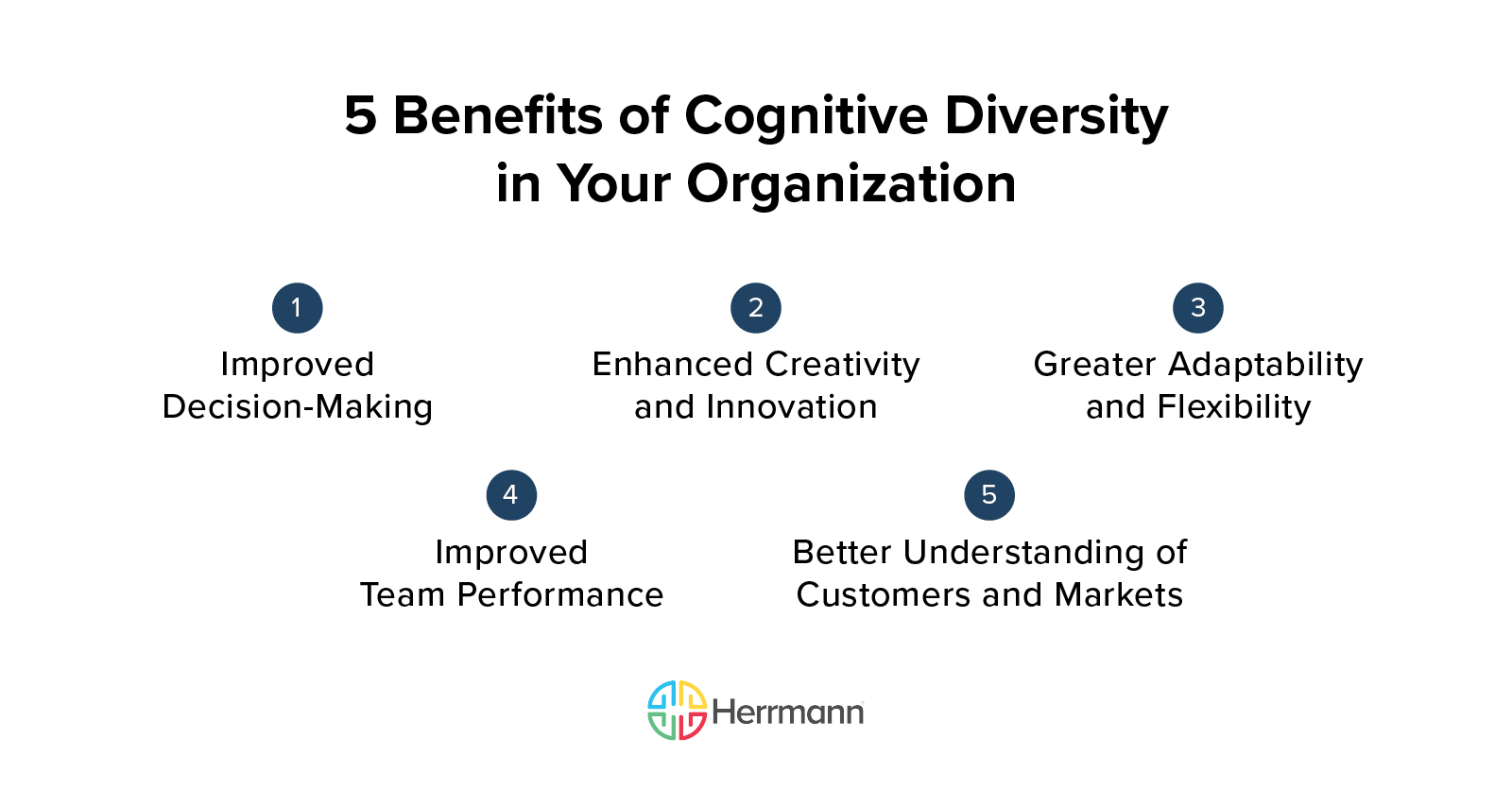
On top of that, hiring a global team has another major benefit that’s often overlooked – increased cognitive diversity.
And this isn’t just another empty, meaningless buzzword.
According to a Harvard Business Review study, cognitively diverse teams adapt better to change and solve problems faster.
And if you’re in a highly competitive market, being able to adapt better and faster can mean the difference between success and failure.
How access to a large talent pool benefits your business
Access to diverse skills – If you offshore development, you get access to experts with specialized skills and expertise that might be hard to find and hire locally.
Faster hiring process – When you’re not limited to just local talent, you can more easily find the right fit for your project which speeds up the hiring process.
Innovation and cognitive diversity – Offshoring development brings together professionals from different cultures and backgrounds, so you can get different perspectives and innovative solutions.
No administration overhead
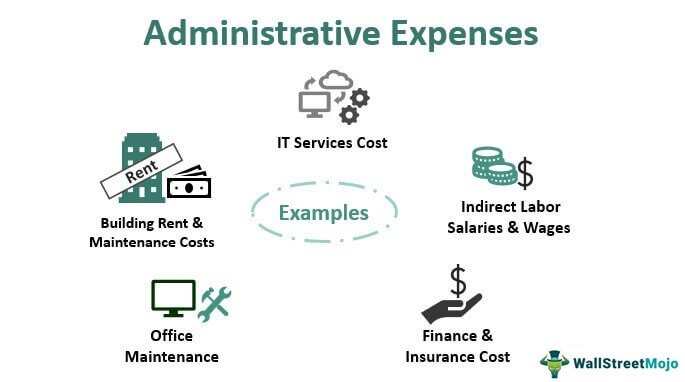
Offshoring software development has another major advantage over hiring in-house – it eliminates the administrative overhead of hiring and managing a development team.
This means you don’t have to worry about:
Recruitment costs
Onboarding costs
Paying employee benefits
That’s because you only sign a contract with a vendor – you get a team without having to spend time and money on recruitment, onboarding, and other administrative tasks.
And offshoring reduces other administrative expenses, too.
Let’s say you’re a startup and your product starts blowing up so you need to hire a bunch of new talent.
If you hired an in-house team, you’d have to get new equipment and expand your offices, for a start – and those costs add up quickly.
But, if you offshore development, you’ll only have to pay the company you partner withwhile your administrative expenses stay the same.
This will allow you to focus and spend more money on growing your business.
How reduced administrative overhead benefits your business
Reduced management burden – Hiring an offshore development team reduces the burden on management, allowing them to focus more on long-term strategy and planning.
Improved flexibility and efficiency – Less administration overhead means your business can better respond to changes in the market and is overall more efficient.
Reduced administrative costs – No administration overhead significantly reduces administrative costs which will allow you to spend your budget on more important initiatives.
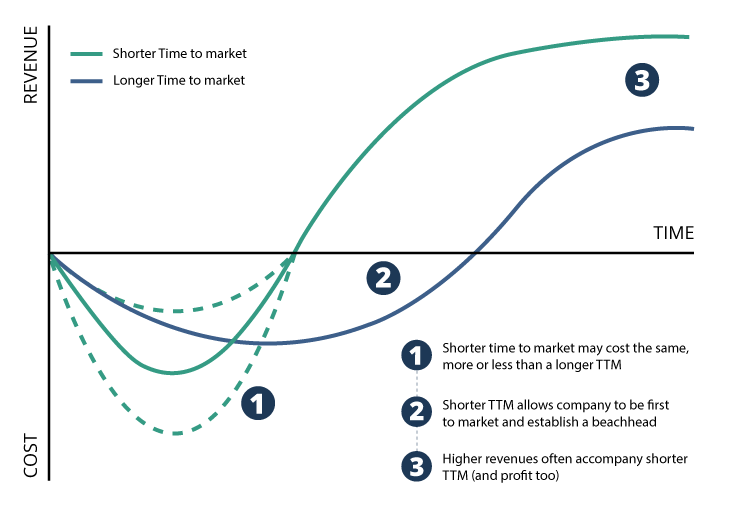
Shorter time-to-market
If you offshore your product’s development, you’ll get it to market faster.
A shorter time-to-market can mean the difference between being a market leader or a follower.
If you get your product into your users’ hands faster than your competitors, you’ll get a huge competitive advantage.
And a shorter time-to-market means higher revenue and profitsat a similar cost as a longer time-to-market:
But, how exactly does offshoring reduce time-to-market?
For starters, when you hire an offshore development company, you get a ready-made team that can jump right in and start building your product.
Also, the right offshore development company will have a lot of experience so they’ll have effective project management practices in place.
That will allow them to tackle complex projects and problems with (relative) ease, which will speed up your product’s development.
How a shorter time-to-market benefits your business
Competitive advantage – Beating your competitors to market with your product or product updates can mean the difference between success and failure.
Investor confidence – If you can launch your product on time or even ahead of schedule, investors will be more likely to support your business.
Earlier revenue generation – Getting to market quickly means you will start earning money sooner, which will improve your organization’s cash flow and financial stability.
Easily scalable
Another major benefit of offshore software development is that it’s easily scalable.
But, what does that actually mean?
It means that you can easily scale the team you hire up or down, based on your business needs at a given time.
Let’s say you’re a startup and you’ve hired a small team to build a prototype you then present to investors and get funding.
Your next step is to build an MVP – you can easily scale the existing team and turn it into a dedicated team that will build your MVP.
And once your product is on the market, you can just as easily scale the team down if you just need occasional updates and regular maintenance and support.
This is much cheaper and easier than hiring a bunch of in-house staff and then laying them off if/when conditions change.
So, with an offshore partner, you can grow or shrink your development team based on your specific needs.
How easy team scalability benefits your business
Responding to changing market conditions – If you have to rapidly scale up or down your team based on market conditions, it’s much easier with an offshore team.
More cost-effective – Scaling an offshore team is much more cost-effective than scaling an in-house team, which helps with budget management.
Minimizes recruitment costs – If you scale an offshore team, you’ll avoid recruitment and onboarding costs which can add up quickly.
Access to specialized skill sets
Finding the right talent to build your product can be very challenging.
And if you need people with specialized skill sets, it’s even tougher – that’s where offshore development comes in.
Finding AI engineers is getting harder by the day and hiring experienced fintech engineers isn’t a walk in the park, either.
But, if you hire a company that has experience building both fintech and AI-powered apps, you’ll kill two birds with one stone.
Also, hiring that company will be much more affordable than hiring in-house experts, especially if you’re a budget-conscious startup.
And the best part?
Since they already have the necessary expertise and experience, they’ll be able to build your product faster and make it better.
How having access to specialized skill sets benefits your business
Improved product quality – Having experts with the necessary skills working on your product will help you build a better, higher quality product.
Cost-efficient hiring – Hiring offshore talent with the skills you need is much cheaper than hiring specialists locally, where they might be too expensive or hard to find.
Faster development – An experienced team with specialized skills will have an easier time solving complex problems when working on your product, which will speed up its development.
Less risk
There’s one underrated benefit of offshore software development – it’s less risky than assembling a team from scratch.
And that’s especially true if you don’t have experience with software development.
But, this only works if you hire the right vendor – there are plenty of horror stories out there about outsourcing to a poor quality company.
So, they’ll know exactly what to do to build a successful product. But, this begs the question – how do you find a company that’s the right fit?
This is what you need to do:
Define your goals and requirements first
Review their case studies and previous work
Check their reviews
Evaluate their tech stack
Look into their pricing
Doing all of this will help you narrow down the list of potential vendors and find the perfect fit for your project.
And that will minimize the risk involved.
How reducing risk benefits your business
More predictable costs – Offshore development, especially if you go with a fixed-price contract, offers lower, more predictable costs compared to hiring in-house.
Security and compliance standards – The right offshore software development companies will have strict security and compliance standards, like ISO/IEC 27001, so the risk of data breaches is much lower.
Risk management – Offshore development companies have a lot of experience working on different projects, so they’re able to identify and manage risks early.
Offshore software development benefits: FAQs
You should opt for offshore software development when:
You want to lower development costs
You have a tight budget
You need to plug skill gaps in your in-house team
You need an easily scalable team without hiring overhead
Ante is a true expert. Another graduate from the Faculty of Electrical Engineering and Computing, he’s been a DECODEr from the very beginning. Ante is an experienced software engineer with an admirably wide knowledge of tech. But his superpower lies in iOS development, having gained valuable experience on projects in the fintech and telco industries.
Ante is a man of many hobbies, but his top three are fishing, hunting, and again, fishing. He is also the state champ in curling, and represents Croatia on the national team. Impressive, right?
What is offshore software development, how does it work, and how do you choose the right partner? A practical 2026 guide covering costs, models, risks, and top destinations.